- Home
-
About Us
-
Program
-
Media
- Volunteer & Internship
-
Academy
- InnoHub
- Contact Us
Quarterly Report | Fulfilling Our Global Mission: GSLDC Activities in the First Quarter of 2026
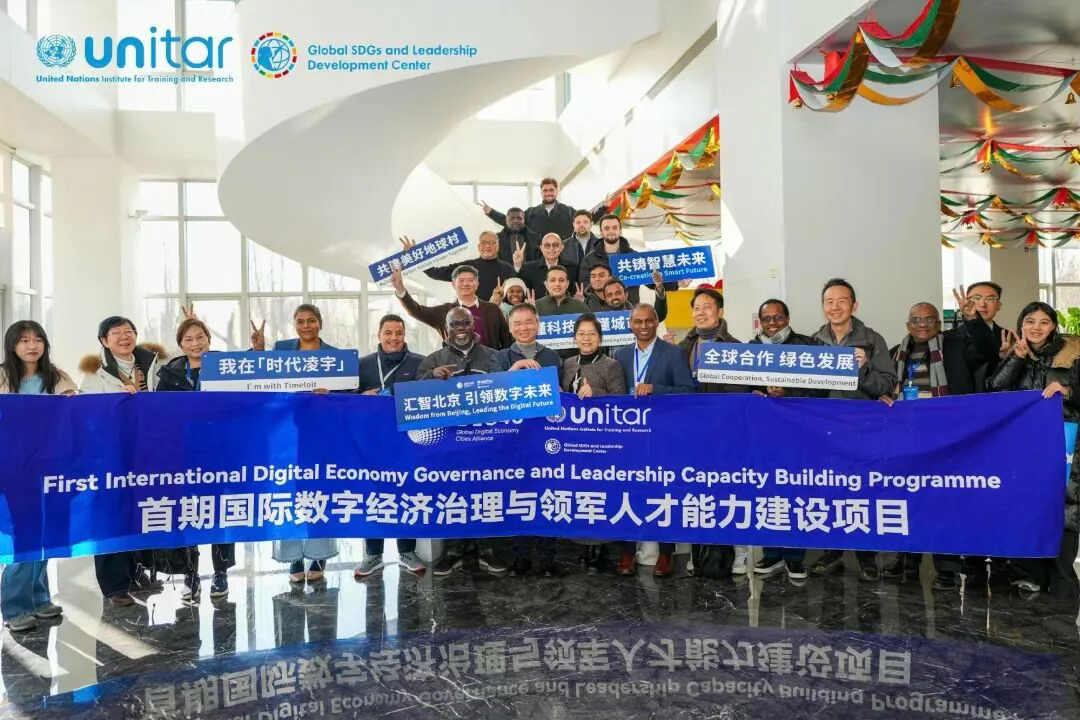
In the first quarter of 2026, the Global SDGs and Leadership Development Center (GSLDC) actively pursued its global mission through a programme of internationally significant activities. These covered a broad range of themes — digital economy governance, youth talent cultivation for international organisations, cultural exchange, youth innovation and entrepreneurship, and artificial intelligence — contributing fresh momentum to the implementation of the global sustainable development agenda.
Event Review
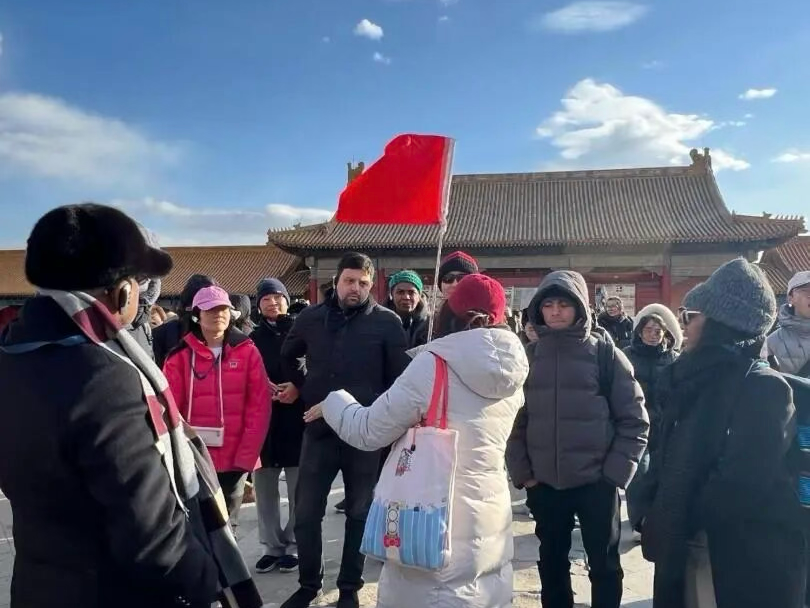
- 27 January to 4 February — The “International Digital Economy Governance and Leadership Capacity Building Programme,” organised by the Center, was held in Beijing. Thirty-four senior officials, urban decision-makers, and industry leaders from 17 countries participated in the nine-day immersive programme.
- 2 February — The inaugural “Summit Forum on Youth Talent Cultivation for International Organisations (Hong Kong SAR, China),” co-hosted by the Center, was held at the Hong Kong Polytechnic University. Mr. Francis Gurry, Co-Chair of the Advisory Committee of GSLDC and former Director-General of the World Intellectual Property Organization (WIPO), delivered a keynote address on pathways for international talent development in the era of AI.
- 27 February — The 2026 “Peace and Friendship” Chinese New Year Gala, co-hosted by the Center, was held in Paris, France. Simultaneously, a “Peace and Friendship” art exhibition was held at UNESCO Headquarters.
- March — The Center, in collaboration with partner institutions, launched a global call for submissions for the “International Young Entrepreneurs’ Digital Innovation Cases” project, covering themes including smart cities, green innovation, digital trade, and connectivity.
The Center Launches the “International Digital Economy Governance and Leadership Capacity Building Programme”
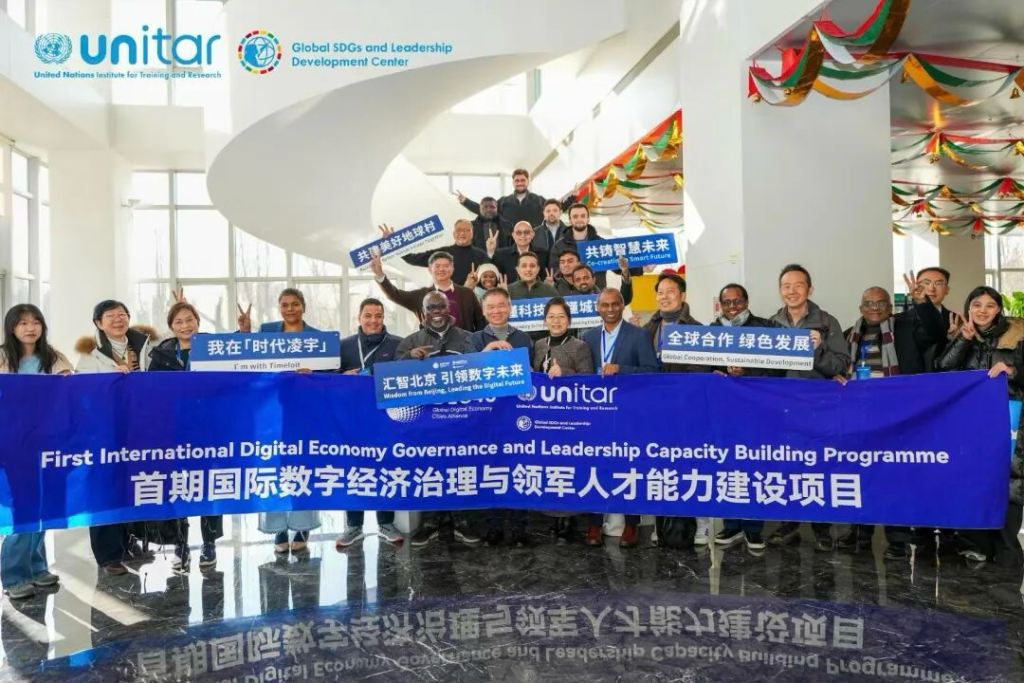
On 27 January 2026, the Center officially launched the “International Digital Economy Governance and Leadership Capacity Building Programme” in Beijing, running through 4 February. GSLDC served as organiser, co-hosting the programme with several government agencies and international organisations. Guided by the United Nations Sustainable Development Goals and the UN Global Digital Compact, the programme brought together 34 senior officials, urban decision-makers, and industry leaders from 17 countries.
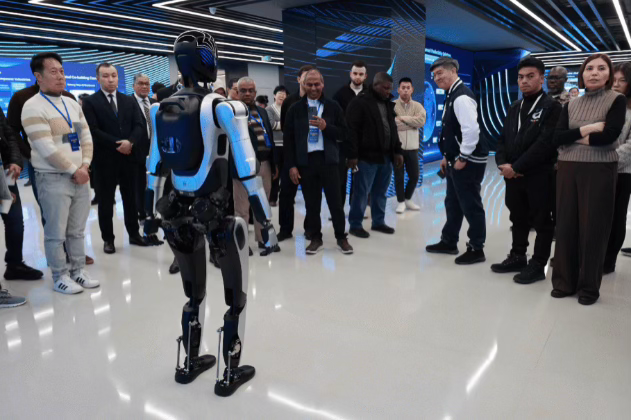
Over nine immersive days, the Center delivered an integrated curriculum spanning policy, industry, and finance. A “Digital Economy Governance Policy Dialogue” session facilitated in-depth discussion on digital policy development, cross-border payment facilitation, technology cooperation, and digital inclusivity. Through a combination of coursework, site visits, and facilitated exchanges, participants engaged with issues including digital governance, AI ethics, smart transportation, and digital health.
On 4 February, a graduation ceremony was held at Beijing Vocational College of Science and Technology. The first cohort of 2026 members of the Global Digital Economy City Alliance received their certificates, and cooperation frameworks were announced to advance ongoing exchange and collaboration.
On 31 March, at the Digital Economy Cooperation and Innovation Forum held in Geneva, the Center launched the second phase of the programme. Maintaining the integrated curriculum framework of policy, industry, and finance, the Center organised multiple dialogue and exchange sessions centred on digital governance, AI ethics, and cross-border data flows. The programme aims to deepen international dialogue and practical cooperation in digital economy governance, in alignment with the UN Global Digital Compact and broader global digital governance objectives.
The Center Co-Hosts the Inaugural Summit Forum on Youth Talent Cultivation for International Organisations (Hong Kong SAR, China)
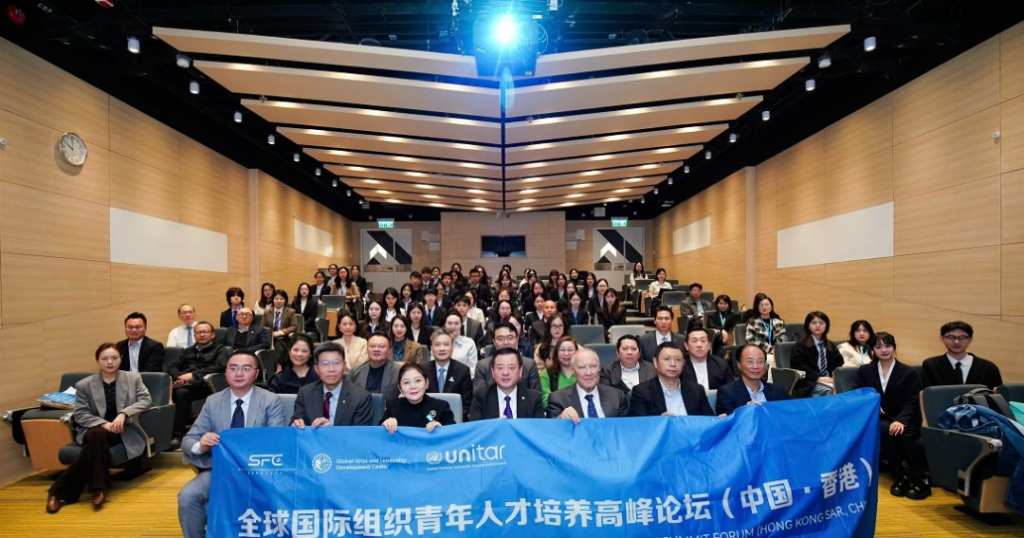
On 2 February 2026, the inaugural “Summit Forum on Youth Talent Cultivation for International Organisations (Hong Kong, China)” opened at the Hong Kong Polytechnic University. As one of the co-organisers, the Center convened representatives from United Nations agencies, academic experts and scholars, university leaders from mainland China and Hong Kong, industry professionals, and youth delegates — bringing together diverse stakeholders for keynote addresses, closed-door meetings, and policy discussions.
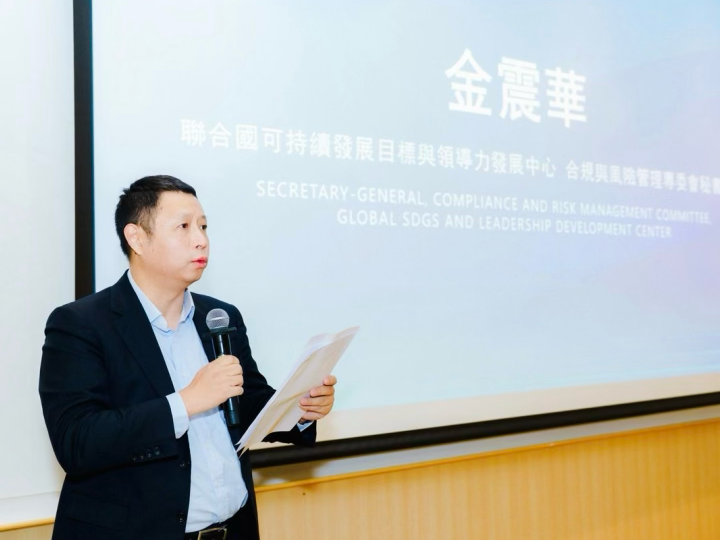
Mr. Jin Zhenhua, Secretary-General of the Compliance and Risk Management Committee of GSLDC, noted in his address that the forum aims to help young people develop a systematic understanding of global governance frameworks and the operational mechanisms of international organisations, build cross-cultural leadership capabilities, and prepare the next generation for meaningful roles within the United Nations and other international bodies.
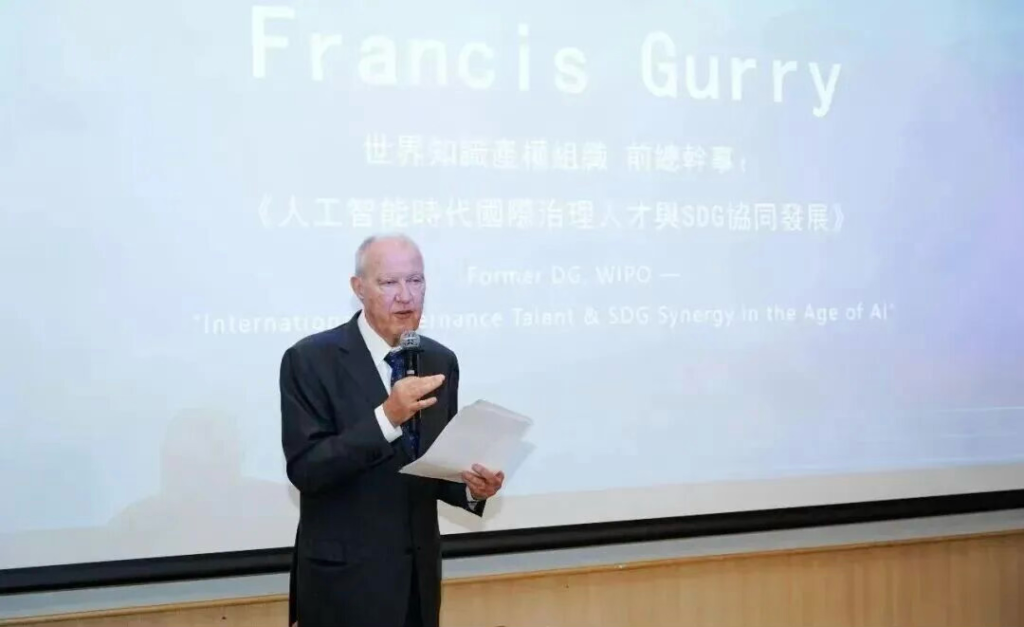
Mr. Francis Gurry, Co-Chair of the Advisory Board of GSLDC and former Director-General of WIPO, delivered the keynote address. He observed that the question of talent development in the era of artificial intelligence may appear contradictory — as AI is often assumed to reduce demand for certain professional roles. Yet, he argued, this tension only underscores the importance of purposeful talent cultivation and good governance in the AI era.
Mr. Gurry offered two recommendations: first, that AI be integrated across all levels and types of education, from primary and secondary through to university, technical, business, and vocational programmes; and second, that open and accessible learning pathways in AI be actively developed. He called for the creation of a shared blueprint on “how AI can support the achievement of the Sustainable Development Goals” and an open platform through which relevant AI applications could be freely shared — both to advance the SDGs and to inspire greater youth participation in international affairs.
The Center Co-Hosts the 2026 “Peace and Friendship” Chinese New Year Gala in Paris

On 27 February 2026, the 2026 “Peace and Friendship” Chinese New Year Gala was held in Paris, France, co-hosted by GSLDC. Nearly 400 attendees joined the event, including envoys from permanent delegations to UNESCO, representatives of international organisations, and guests from diverse professional and cultural backgrounds.
The Spring Festival — listed on UNESCO’s Representative List of the Intangible Cultural Heritage of Humanity — is increasingly recognised as a cultural symbol that embodies shared human values. The choice of Paris as the setting for this gala aimed to use the Spring Festival as a bridge for cultural exchange and mutual understanding across countries and communities. The programme featured folk music, ethnic dance, choral performance, and original works, showcasing Chinese cultural heritage while incorporating artistic contributions from France, Belgium, the United Kingdom, Mauritania, and other participating nations.
A “Peace and Friendship” art exhibition was held simultaneously at UNESCO Headquarters, enriching the event with a visual dimension and deepening cultural dialogue and connection.
The Center Launches a Global Call for “International Young Entrepreneurs’ Digital Innovation Cases”
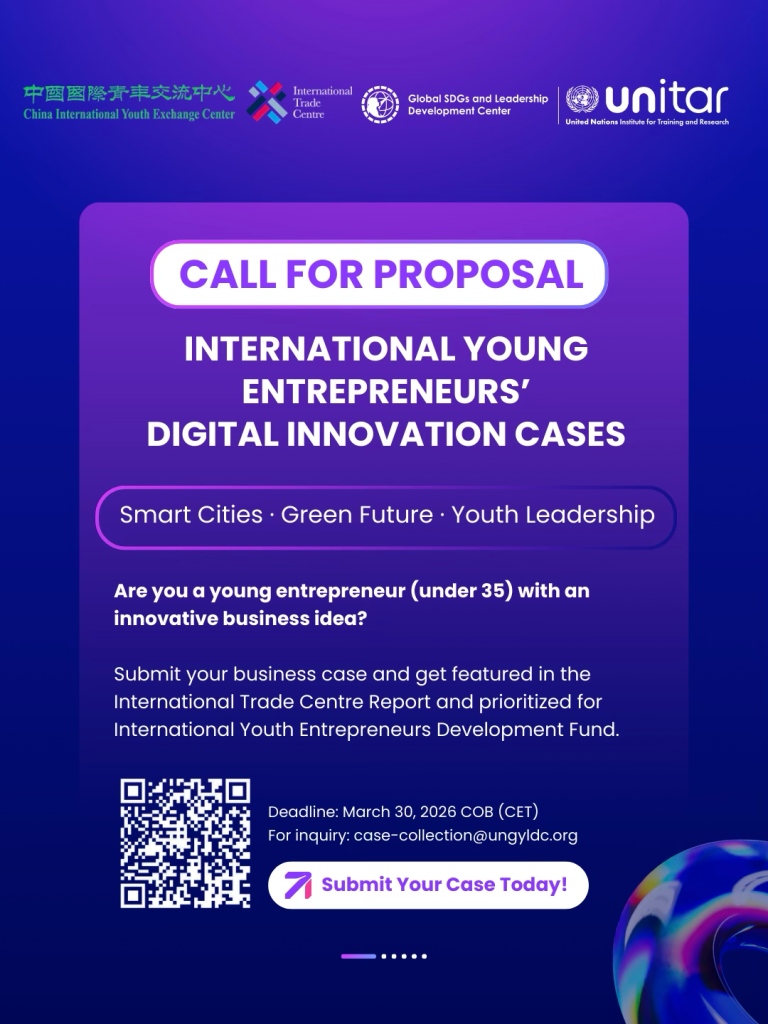
In March 2026, the Center, in collaboration with partner institutions, initiated a global call for submissions for the “International Young Entrepreneurs’ Digital Innovation Cases” project, focused on youth-led innovation in the digital economy and green transformation. The initiative aims to identify representative examples of digital innovation practice, showcase the achievements of young entrepreneurs, facilitate experience-sharing and international cooperation, and collectively explore new pathways for digital technology to advance sustainable development.
The call centres on themes including smart cities, green innovation, digital trade, and connectivity, encouraging submissions of digital innovation cases aligned with United Nations Sustainable Development Goals 8, 9, and 11. Selected entries will have the opportunity to be featured in global publications, gain international visibility and professional networks, and will be considered for support through the International Youth Entrepreneur Development Fund, administered in accordance with established grant criteria.
Looking Ahead
Building on the activities and partnerships developed in this quarter, GSLDC will continue to advance programmes and initiatives centred on digital governance, youth development, international exchange, and innovation and entrepreneurship — in service of our commitment to the 2030 Agenda for Sustainable Development.