
- Home
-
About Us
-
Program
-
Media
- Volunteer & Internship
-
Academy
- InnoHub
- Contact Us
GSLDC, GSMA and WIC Convene Inaugural Shanghai Workshop of the Global Digital Leadership Development Program
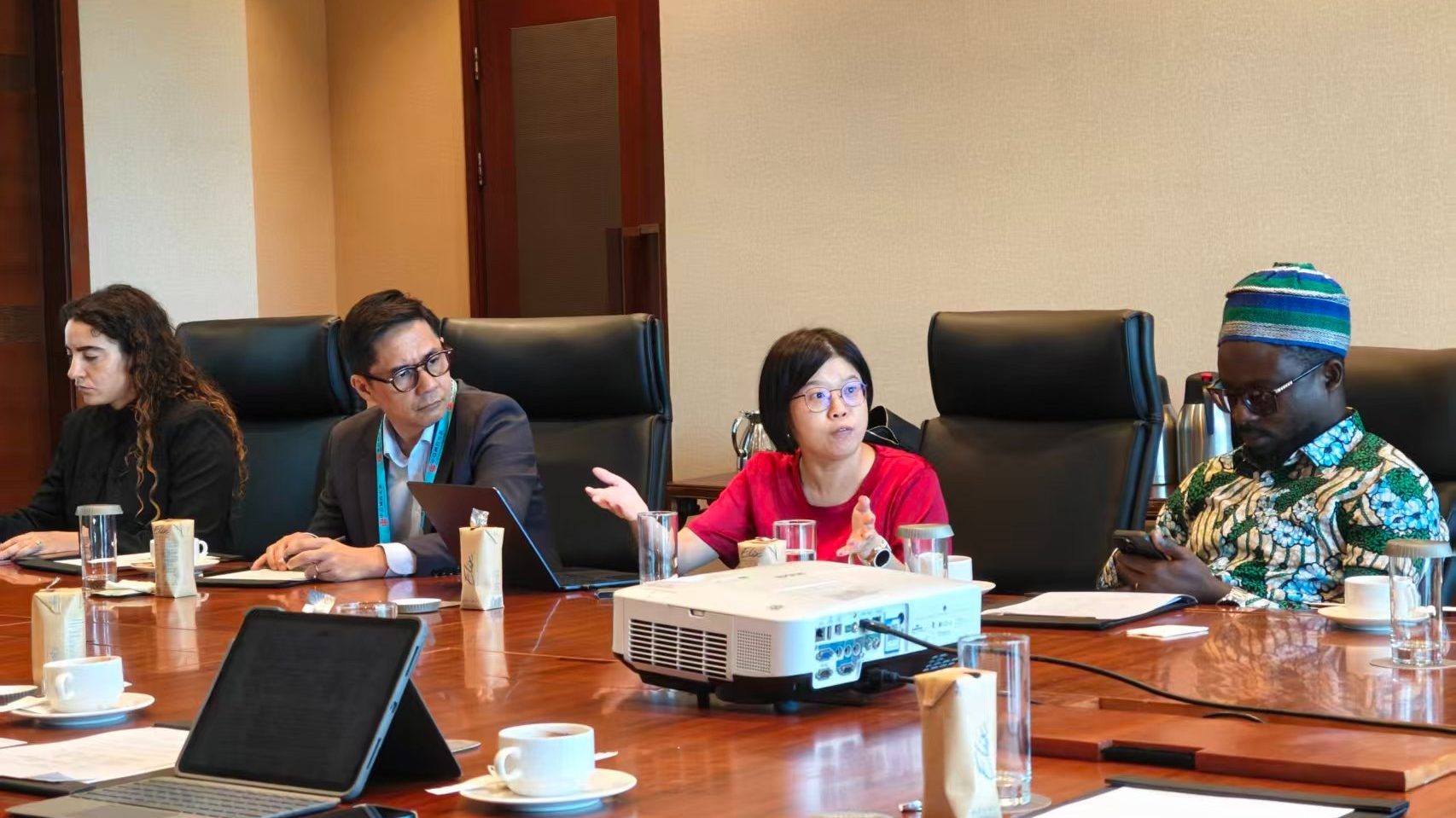
Pudong Kerry Hotel, Shanghai — 26 June 2026
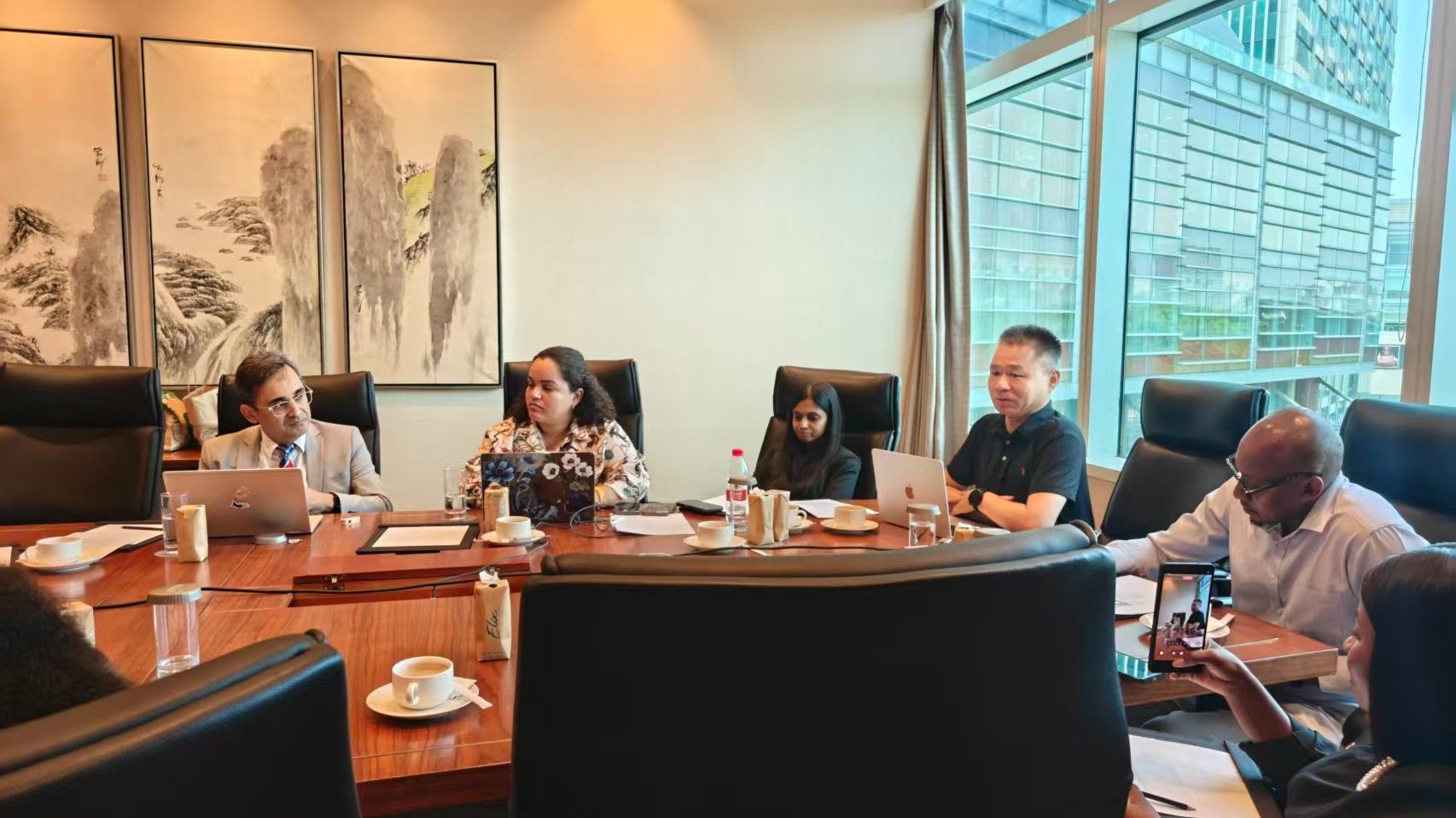
The Global SDGs and Leadership Development Center (GSLDC), in collaboration with GSMA and the World Internet Conference (WIC), hosted the inaugural Shanghai workshop of the Global Digital Leadership Development Program on 26 June 2026. The full-day capacity-building event brought together diplomats, policy makers, and industry leaders for a structured exchange on digital and AI governance, sustainable digital infrastructure, and next-generation connectivity.
Program Overview
Designed to help diplomats, policy makers, and industry leaders “go with the tides of the latest digital and smart governance and development in China and across the globe at large, particularly in a Mobile+AI era,” the workshop combined formal lectures, an exhibition tour, and structured Q&A across three core modules.
Module 1: AI Trends and Implementation in China
The morning opened with a session on China’s digital and AI policy landscape, delivered by an invited speaker from the Cyberspace Administration of China (CAC), followed by a global-sharing segment and Q&A led by UNIDO’s Global AIM initiative.
Module 2: Global Digital Governance and Strategic Leadership
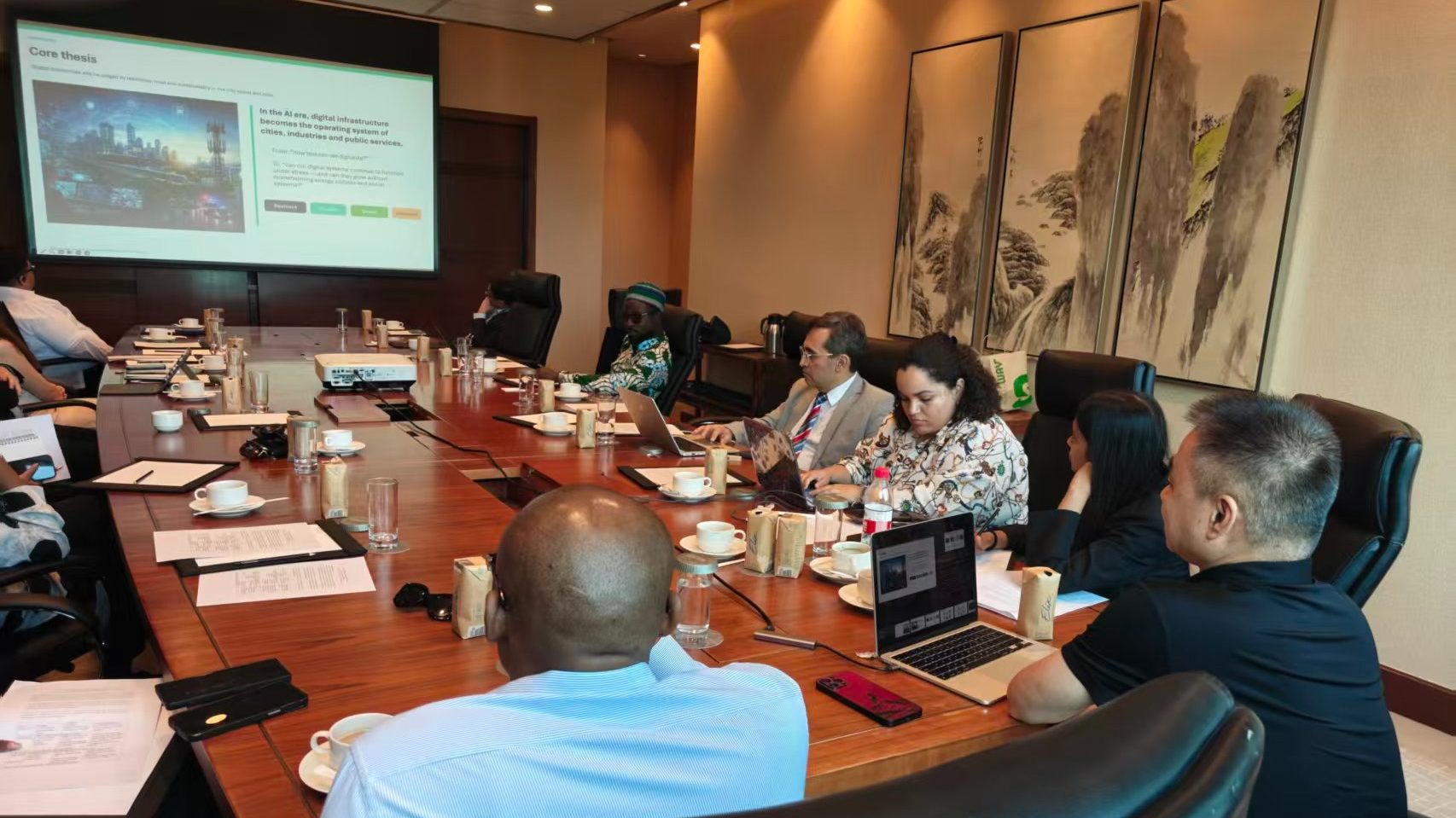
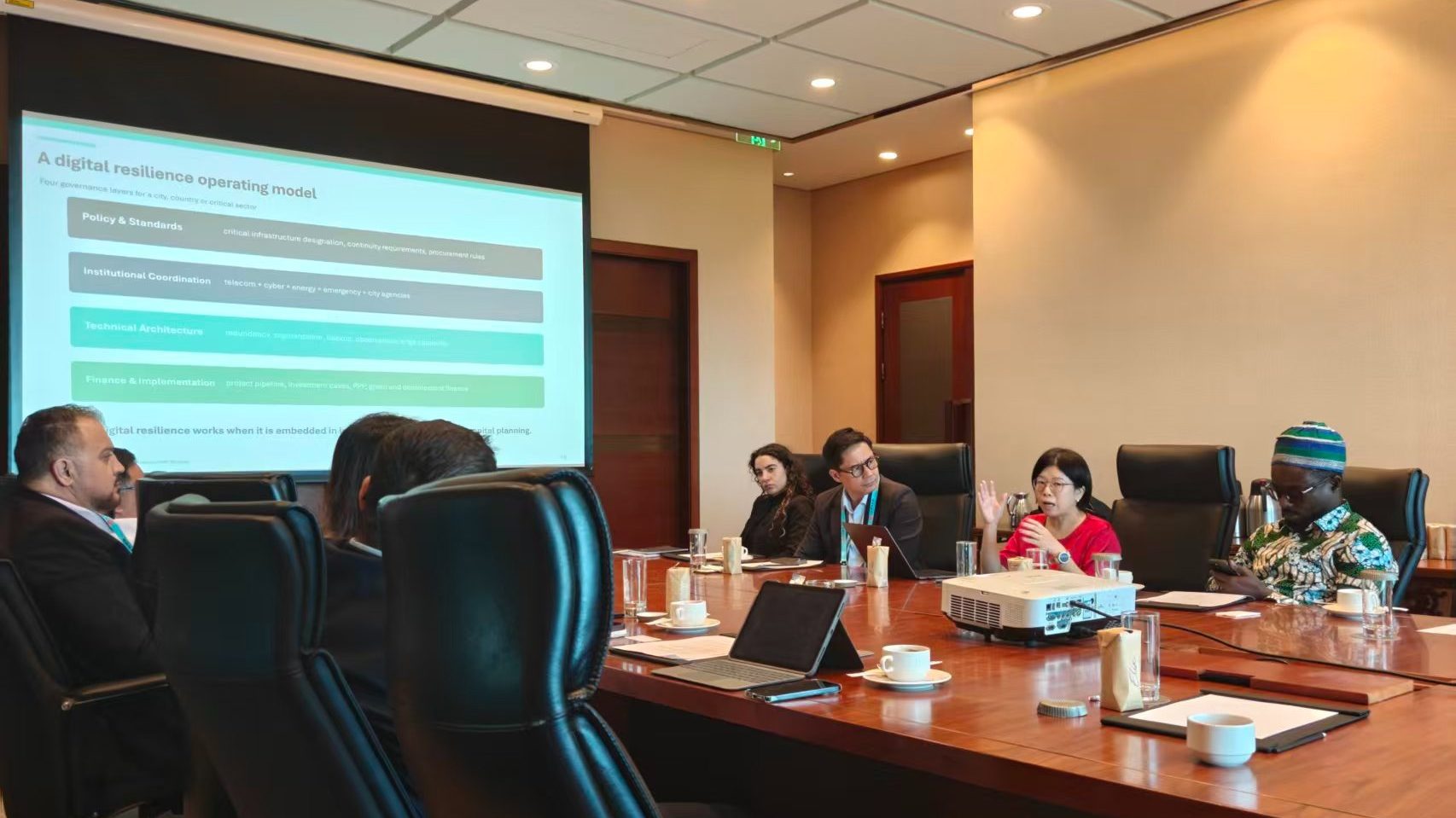
Johnny Huang, Exco Member and Secretary General of GSLDC’s Sustainable Cities and Sustainable Finance Working Group, presented on digital resilience and green computing, positioning sustainable infrastructure as a foundational pillar for digital economies going forward.
Exhibition Tour
Following a lunch break for informal discussion, participants toured key MWCS exhibitors including China Mobile, the 6G Zone, and Honor, linking the morning’s policy discussions to live technology demonstrations.
Module 3: GSMA Next-Generation Connectivity Technology
The afternoon featured two presentations from GSMA: Dr Mani Manimohan, Head of Digital Infrastructure Policy and Regulation, spoke on 5G-Advanced, IoT, and the requirements of a well-connected digital city; Luciana Camargos, Head of Spectrum at GSMA, closed the formal program with an assessment of spectrum challenges ahead for 6G and direct-to-device (D2D) technology. The day concluded with an open discussion, Q&A, and closing remarks.
Participants
The workshop drew fifteen confirmed delegates representing a wide range of governments and international organizations:
Country / Region – Organization – Representative
Botswana – Ministry of Youth and Gender Affairs – Moemedi Bosupeng, Expert on Economic and Gender Issues
Ethiopia – Sidama Region – Lidiya Tadesse Adela, Deputy Auditor General
Zambia – Ministry of Finance and National Planning – Lifalalo Auxillia Namasiku, Senior Economist
Sri Lanka – Ministry of Tourism – Yakupiti Yagekasunisandunika, Development Officer
Dominican Republic – Ministry of Finance – Payanopena Maria Alexandra, International Cooperation Analyst
Sierra Leone – National Privatization Commission, Office of the President – Alusine Bai Kamara, Administrative Officer
China – Cyberspace Administration of China – Liu Xinzhe, Cadre of General Division, Bureau of Network Management Technology
Singapore – IMDA China Office – LU Shangyuan, Deputy Director; Arlene Zhao, Manager
Argentina – Consulate General of Argentina in Shanghai – Ignacio Donisa, Commerce Consul; Sara Deygas, Trade Officer
Spain – Spain Trade Commission, Shanghai – Regino Serrano, Head of Digital Technology
Philippines – Department of Tourism – Ghienel Gustilo, Attaché
UNIDO – Directorate of Technical Cooperation and Sustainable Industrial Development – Farrukh Alimdjanov, Industrial Development Officer; Nishtha Mehta, Senior Advisor, International Centers of Excellence
Context and Outlook
This workshop marks the first stop in what GSLDC, GSMA, and WIC intend as an ongoing series under the Global Digital Leadership Development Program, designed to extend similar cross-sector dialogue to additional cities and regions. By placing government regulators, multilateral institutions, and industry technologists in direct dialogue, the program aims to close the gap between digital policy formation and the technical realities of implementation — a gap that is, often, where good governance frameworks succeed or fail in practice.
GSLDC extends its appreciation to GSMA and WIC for their partnership in convening this program, and to all participating delegates for their engagement and contributions.