
GSLDC Co-hosts GI-AI4H 2026 Forum on Medical AI Benchmarking and Talent Governance
Harnessing International Collaboration to Advance Global Health Capacity Building and Talent Governance
Hangzhou, China · September 17, 2026
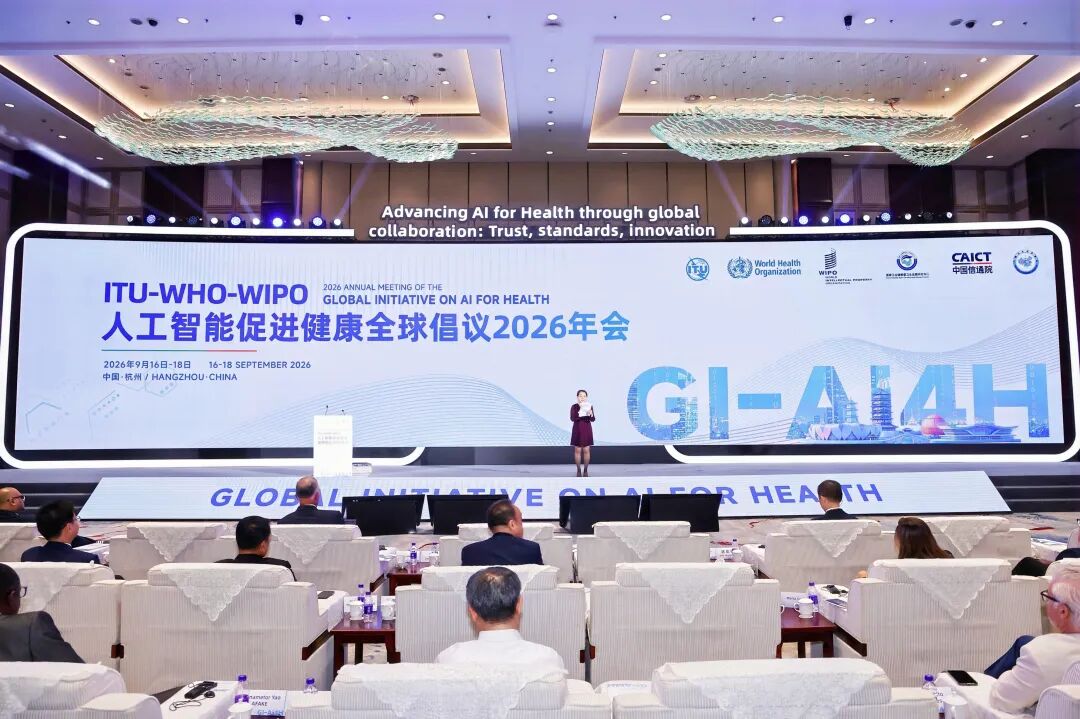
From September 16 to 18, 2026, the 2026 Annual Meeting of the Global Initiative on AI for Health (GI-AI4H) was held in Hangzhou. Jointly convened by the World Health Organization (WHO), the International Telecommunication Union (ITU), and the World Intellectual Property Organization (WIPO), this was the first GI-AI4H Annual Meeting to be held in China. Representatives from international organizations, government authorities, healthcare institutions, universities and research institutes, and industry gathered to exchange views on the responsible and sustainable use of artificial intelligence in health, as well as global governance, technical standards, international collaboration, and capacity building.
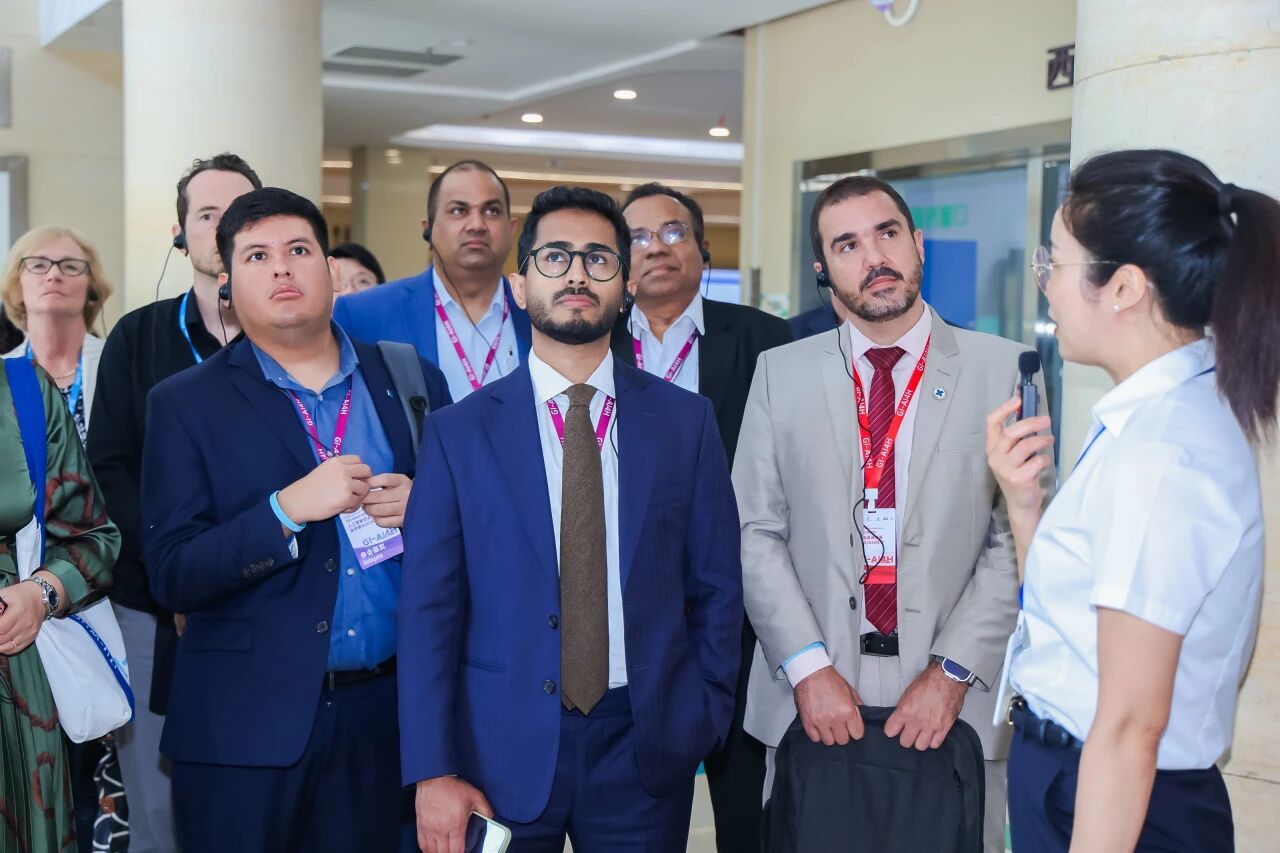
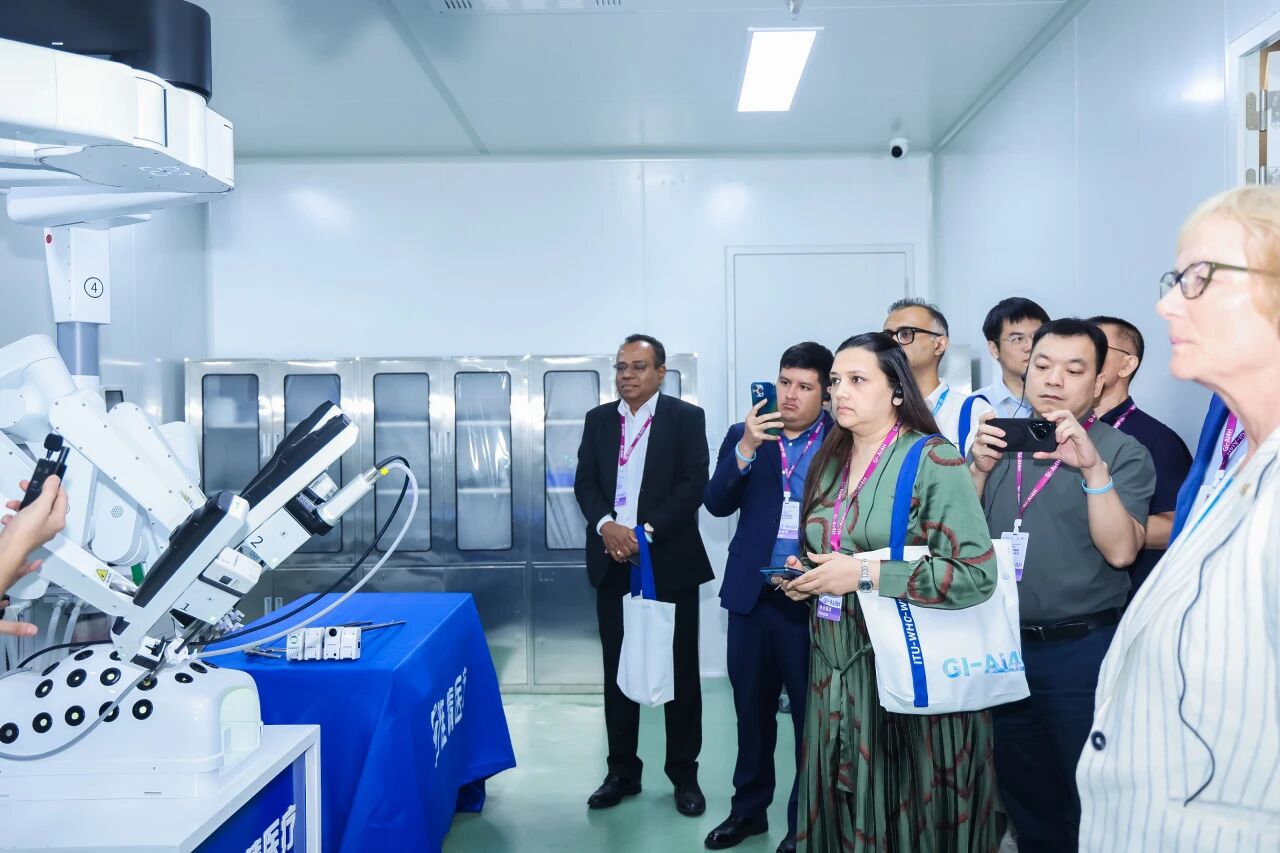
The meeting featured plenary sessions and nine thematic forums, jointly exploring practical pathways for AI to advance global health. As one of the key thematic events of the Annual Meeting, the “Medical AI Benchmarking and Talent Governance” forum was held on September 17. The Global SDGs and Leadership Development Center (GSLDC), as one of the co-hosts, worked with partners to build a platform connecting international organizations, government authorities, universities, healthcare institutions, research organizations, and industry. In-depth discussions focused on medical AI benchmarking, clinical validation, international standards, talent governance, and global capacity building. The forum brought together representatives from WHO, ITU, and the health, medical, research, and industry sectors across multiple countries and regions.
Bringing Together Global Expertise: Advancing Trusted and Responsible Medical AI
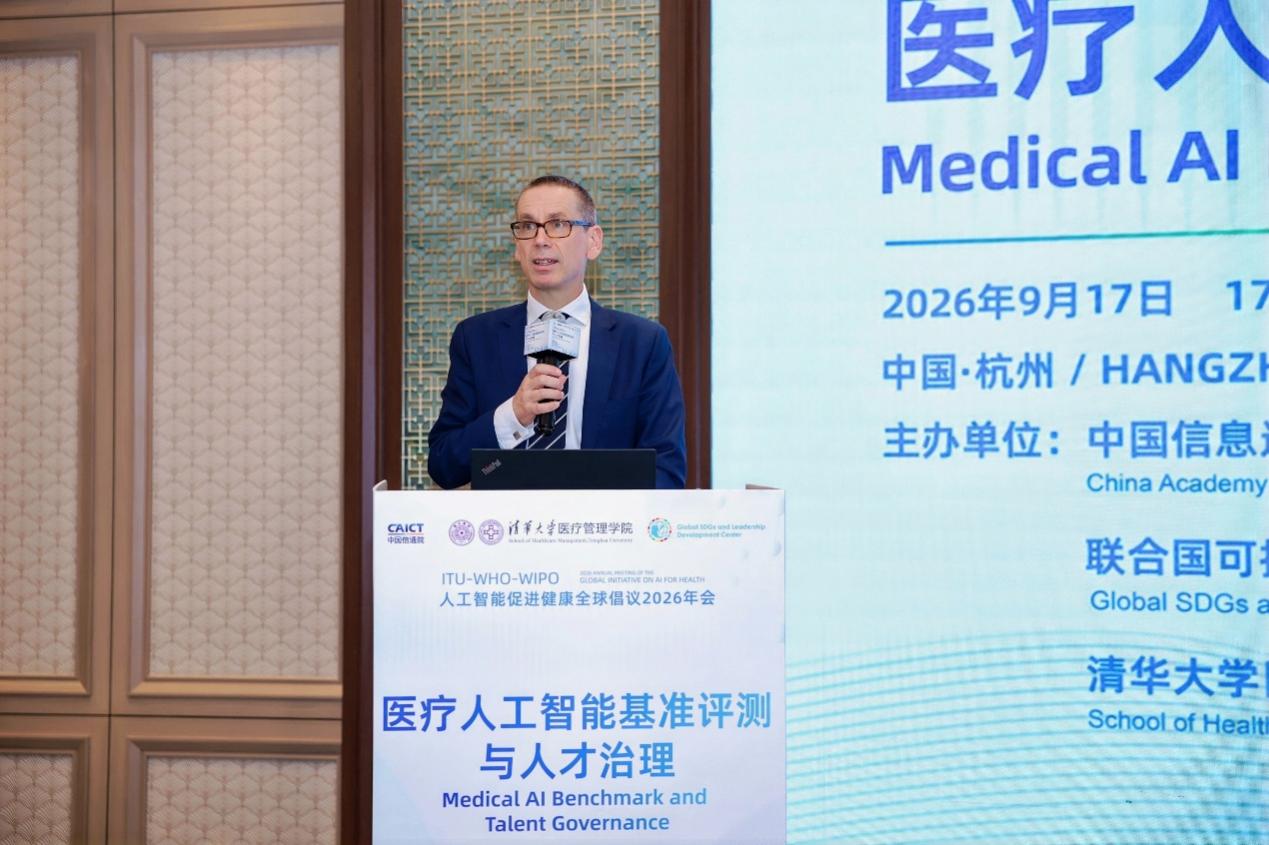
At the forum, representatives of international organizations shared perspectives on the development of medical AI from the viewpoints of global governance, international standards, and capacity building. Martin Taylor, WHO Representative to China, emphasized that medical AI should be fundamentally oriented toward improving people’s health, with real-world and local evidence supporting decisions on technology adoption. He called for lifecycle evaluation and governance across design, validation, deployment, monitoring, and updating. He also stressed the importance of strengthening health workforce capacity and international cooperation so that the benefits of AI can be shared more equitably across countries and populations.
Bilel Jamoussi, Deputy Director of the ITU Telecommunication Standardization Bureau, noted in his video remarks that benchmarking and talent governance are essential foundations for the successful application of AI in health and for building trust. He called for stronger interdisciplinary talent development and collaboration across healthcare, data science, engineering, policy, and governance, supporting countries in building more robust medical AI ecosystems.
Simão Campos, ITU Senior Counsellor, observed from the perspective of international standards and technology governance that medical AI benchmarking should not be limited to a single performance ranking. Instead, lifecycle evaluation should be conducted on the basis of international standards and interoperable infrastructure, generating reliable evidence that is adapted to specific clinical settings, reproducible, and capable of supporting real-world deployment decisions.
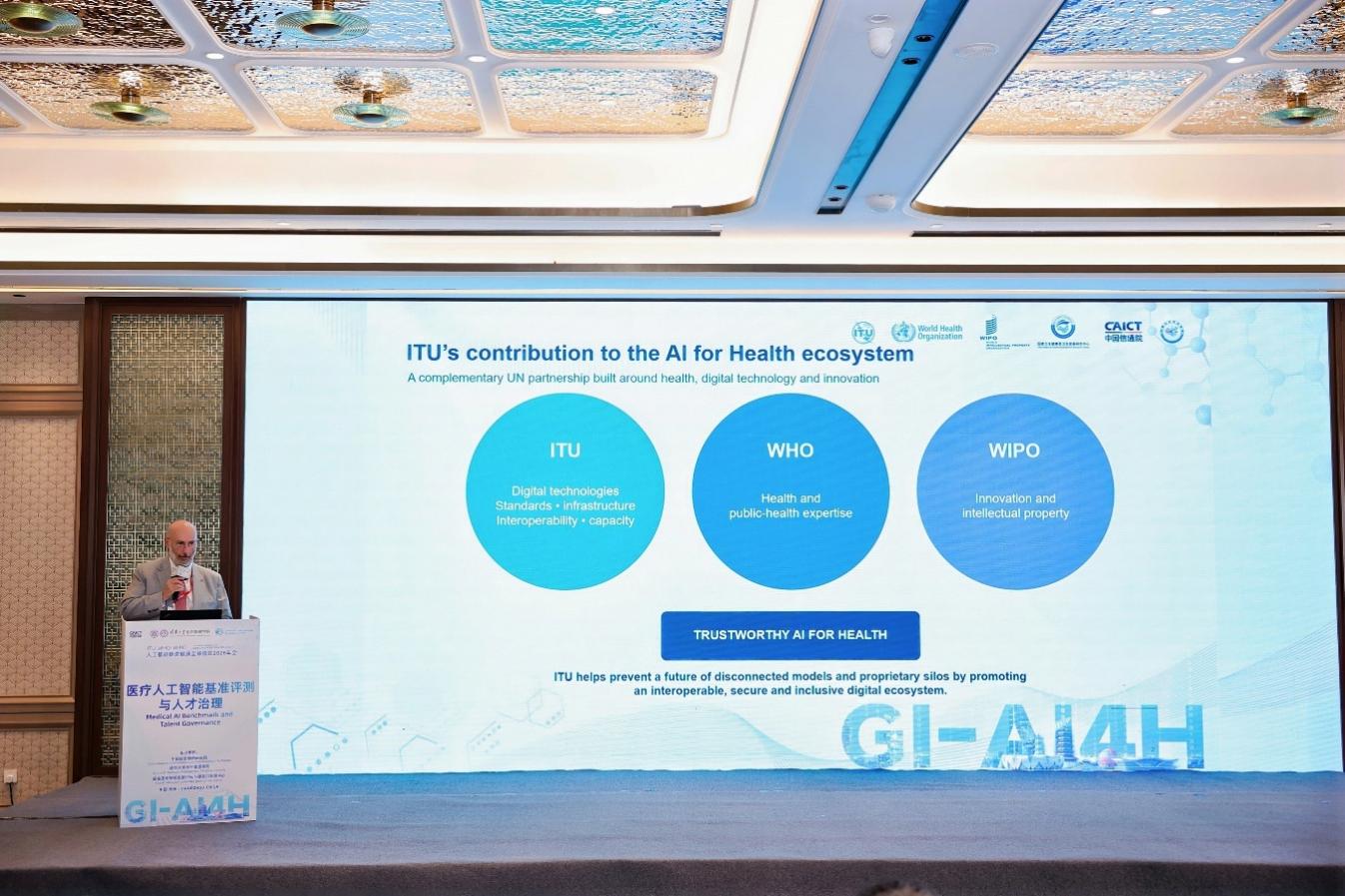
These discussions also reflected a core direction championed by GI-AI4H: the value of artificial intelligence in health depends not only on the pace of technological innovation, but also on whether appropriate governance systems, professional talent, international standards, and cross-sector collaboration mechanisms can be developed alongside it.
From Talent Governance to Capacity Building: Turning Global Initiatives into Action
Beyond technical benchmarking and standards development, talent and capacity building formed a central theme of the forum and an area of particular focus for GSLDC.
During the forum, the School of Healthcare Management at Tsinghua University and GSLDC jointly launched the Global Initiative for Health Governance and Capacity Building. The Initiative focuses on internationally oriented talent development, academic discipline development, faculty development, and scholarly exchange. It explores a talent development pathway combining “degree education + international practical training” and leverages AI-enabled healthcare application scenarios for hands-on learning, with particular attention to health governance and capacity-building needs in the Asia-Pacific region and countries of the Global South.
Part 3 of the forum focused on “Talent Governance and Industrial Implementation” and was moderated by GSLDC. Representatives from universities, technology companies, and the healthcare industry shared practical experience on talent development in the era of AI hospitals, AI-enabled practical education, the integration of “Device + IT + AI,” and the replication of clinical capabilities. The discussion emphasized that healthcare talent development in the AI era should further connect medicine, technology, and governance by integrating real clinical settings, data, technology platforms, and industry cases into teaching, practical training, and assessment.
This direction is closely aligned with GSLDC’s long-term positioning. As an international capacity-building platform dedicated to sustainable development and leadership development, GSLDC connects global knowledge with practical action through training, applied research, international exchange, and innovation initiatives. Its “Learn, Lead, Leap.” philosophy emphasizes building understanding through learning, advancing collaboration through leadership, and ultimately translating innovation into action and impact that address real-world challenges.
Focusing on the Global South: Making AI Medical Education Responsive to Real Needs
How can the opportunities created by artificial intelligence benefit countries and regions with different levels of resources and capacity, particularly the Global South? This was another important issue addressed at the forum. Alexandre Filho, Co-Chair of the GI-AI4H Topic Group on Maternal and Reproductive Health, drew on international practice to emphasize the importance of local data and localized validation when applying medical AI in different regions. In resource-constrained settings in particular, models should be carefully assessed for their suitability in real local contexts.
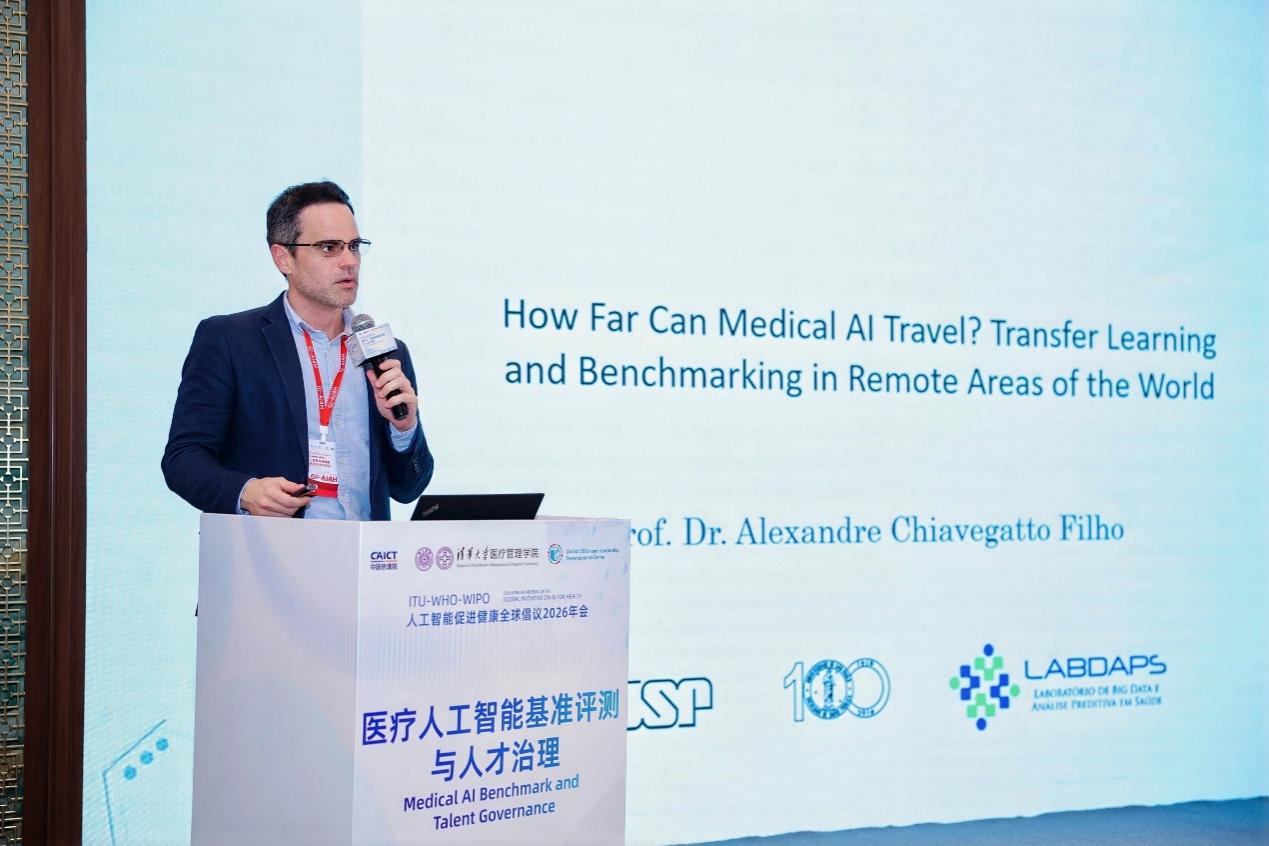
During the roundtable discussion, “How AI-Enabled Medical Education Can Meet the Needs of the Global South: Capacity Building and Industry-Academia-Research Collaboration,” speakers from hospitals, international medical education, technology platforms, and the healthcare industry exchanged views on capability development, curriculum design, and collaboration mechanisms for AI medical education. The discussion focused in particular on how real healthcare settings, clinical data, and industry cases can be integrated into teaching and practical training, and how industry-academia-research collaboration can strengthen curriculum development, case development, and faculty capacity so that AI medical education can better respond to the actual needs of different regions.
Connecting Global Partners: Advancing Inclusive and Sustainable Health Innovation
From trusted medical AI benchmarking to talent development and capacity building in the Global South, the forum further demonstrated that advancing AI for health is not solely a technological challenge. It requires international organizations, governments, universities, hospitals, research institutions, and industry to build long-term, open networks of collaboration.
As a co-host, GSLDC brought the perspectives of sustainable development, international cooperation, and capacity building into the medical AI agenda, extending the discussion beyond technology to talent, governance, and the development needs of different regions. By connecting international organizations, universities, healthcare institutions, and industry partners, GSLDC seeks to foster closer interaction between global knowledge and local practice, so that innovation can not only be developed, but also understood, applied, and sustained.
Looking ahead, GSLDC will continue to advance AI governance, digital innovation, global capacity building, and sustainable development, promoting knowledge exchange and partnerships across regions, disciplines, and industries. Particular attention will be given to the development needs of the Global South and resource-constrained settings, helping digital technologies and artificial intelligence better contribute to a more inclusive, equitable, and sustainable future for global health.
Connecting Global Networks: Advancing Sustainable Health Innovation
The forum brought together international organizations, government authorities, research institutions, hospitals, universities, and companies, reflecting the cross-sector collaboration required for medical AI governance. GSLDC will continue to serve as a platform for international cooperation and capacity building, strengthening the connections among global knowledge, policy dialogue, talent development, and practical projects.
Looking ahead, GSLDC will continue to advance cooperation across AI governance, digital transformation, and sustainable development, promoting knowledge exchange and partnerships across regions and industries. Particular attention will be given to capacity-building needs in the Global South and resource-constrained settings, so that technological innovation can better serve equitable, inclusive, and sustainable health development.