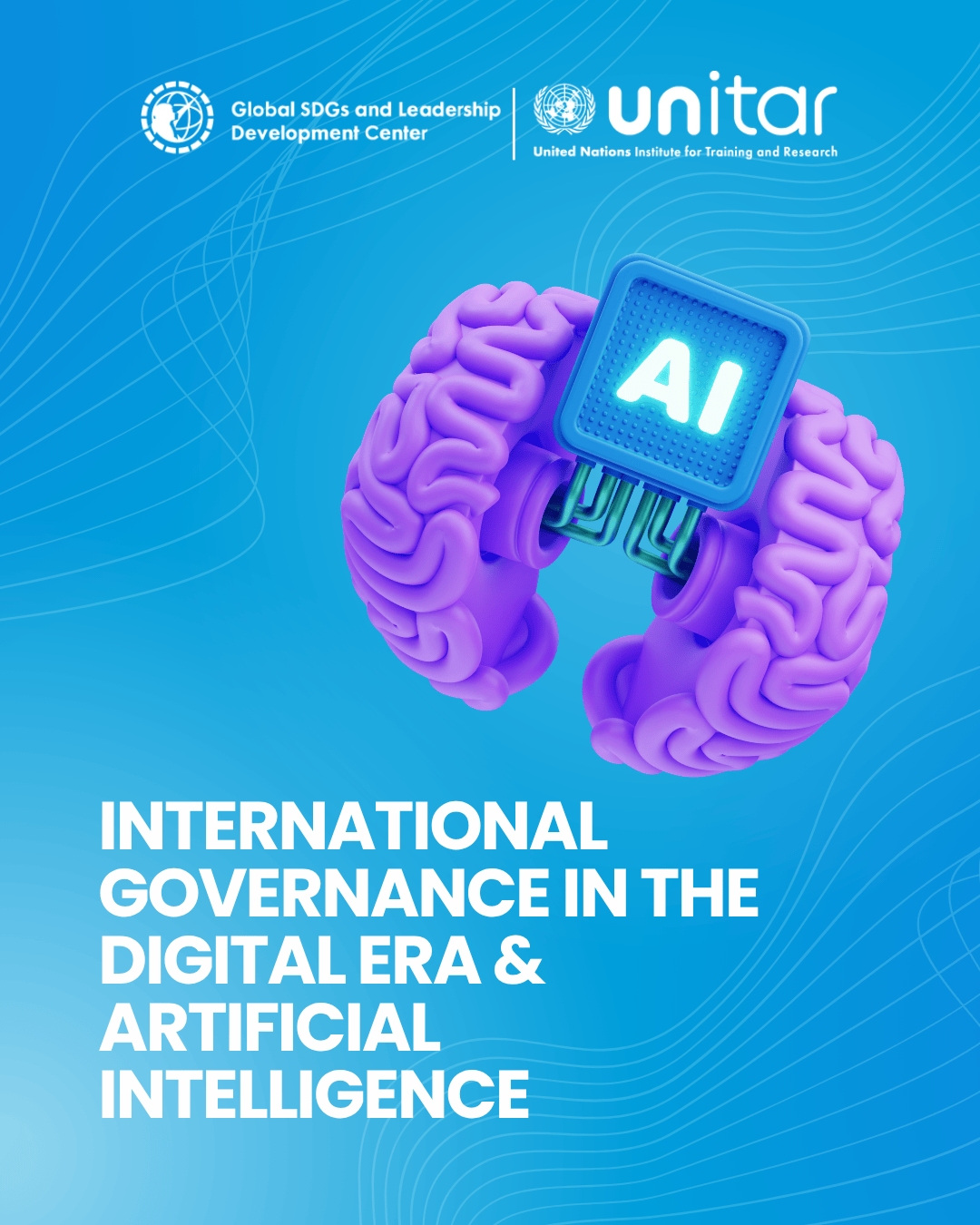
International Governance in the Digital Era & Artificial Intelligence
Course Description:
This course examines how digital transformation and artificial intelligence are reshaping global governance, the role of the United Nations, multilateral cooperation challenges, and the opportunities and risks of AI for achieving the Sustainable Development Goals.
13. International Governance in the Digital Era & Artificial Intelligence
13.1 Lecture 1: Introduction to International Governance & AI
- Understand how digital interconnectivity shapes global governance systems.
- Identify the roles of national, regional, and international actors in AI regulation.
- Explain the United Nations’ role as a neutral global governance platform.
- Recognize the UN’s historical contribution to global norms, peace, and development.
13.2 Lecture 2: The Role of the United Nations
- Understand the structure and global mandate of the United Nations.
- Analyze the UN’s achievements in peacekeeping, humanitarian response, and development.
- Recognize the UN’s global implementation capacity across member states.
- Evaluate the role of multilateralism in digital and AI governance.
13.3 Lecture 3: Global Challenges & the Crisis of Multilateralism
- Recognize the global system as VUCA (Volatile, Uncertain, Complex, Ambiguous).
- Understand the impact of systemic shocks such as pandemics, wars, and climate crises.
- Analyze how geopolitical fragmentation weakens multilateral cooperation.
- Assess the increasing urgency of global coordination in AI governance.
13.4 Lecture 4: SDGs & AI for Good
- Understand the evolution from MDGs to SDGs as a global development framework.
- Analyze how AI supports progress across health, education, and climate action.
- Evaluate the concept of a “missing 18th SDG” focused on digital governance and ethics.
- Recognize the SDGs as a guiding framework for ethical AI deployment.
13.5 Lecture 5: AI Applications for the SDGs
- Define AI and distinguish between narrow and general-purpose AI.
- Explore AI applications in education, healthcare, agriculture, and energy systems.
- Examine real-world AI use cases in disaster response and public health.
- Assess AI’s potential to accelerate SDG achievement globally.
13.6 Lecture 6: AI Risks, Ethics & Governance Gaps
- Identify risks such as misinformation, bias, cyberattacks, and surveillance misuse.
- Understand challenges caused by the rapid pace of AI development outpacing regulation.
- Evaluate the need for coordinated global governance to prevent inequality and power concentration.