
- Home
-
About Us
- Masterclass
-
Our Opportunities
- Certificate
- InnoHub
- News & Updates
- Contact Us
Global Tech Trends and SDGs: Francis Gurry Highlights Pathways for Digital Economy Cooperation
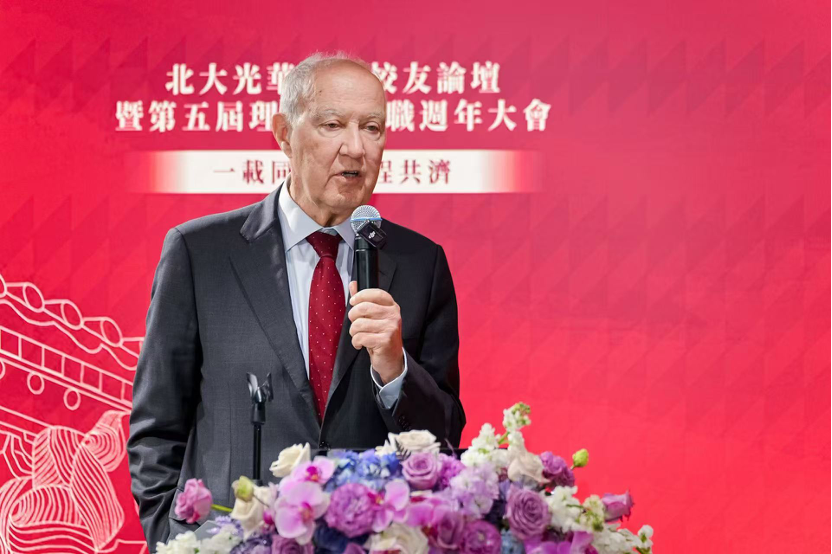
Co-Chair of the Advisory Committee of the Global SDGs and Leadership Development Center (UNITAR-affiliated SDGs Center) Francis Gurry Attends Guanghua HK Alumni Association Event, Shares Global Tech Trends and Advocates for International Cooperation on Sustainable Development
On February 3, 2026, the Peking University Guanghua academy of Management Hong Kong Alumni Association successfully held the “Guanghua Hong Kong Alumni Forum & 1st Anniversary of the 5th Council” in Hong Kong, China. Mr. Francis Gurry, Co-Chair of the Advisory Committee of the Global SDGs and Leadership Development Center (UNITAR-affiliated SDGs Center) and former Director General of the World Intellectual Property Organization (WIPO), was invited as a special guest and delivered a keynote speech. From a global perspective, he provided an in-depth analysis of the development trajectory, current landscape, and future challenges of technology and innovation. Drawing on the Center’s international cooperation practices in digital economy governance, he elaborated on pathways for the digital economy to contribute to the achievement of the UN SDGs, offering insights and direction for the sustainable development of the global digital economy and international collaboration.
Under the theme “Navigating the Journey Together, Steering into New Horizons,” the forum brought together Guanghua alumni based in Hong Kong, industry leaders, and distinguished figures from various sectors. In his speech, Francis Gurry systematically reviewed the evolution of the global innovation ecosystem over the past five decades. He noted that since the 1970s, innovation has become a core driver of global economic growth. Current global R&D investment is approaching $3 trillion, and patent applications have experienced explosive growth following a long period of steady development. Notably, innovation vitality is particularly prominent in Asia, with China emerging as a major force in the global innovation landscape—currently, approximately two-thirds of global intellectual property (IP) applications originate from Asia, and China’s IP filings are twice that of the United States. Concurrently, the global technology governance system is exhibiting increasing complexity and multilayered characteristics, spanning national, bilateral, regional, and international levels, which presents new demands for global innovation collaboration.
Focusing on the latest developments in global technological innovation, Francis Gurry observed that the current landscape is characterized by a dual-core leadership structure involving China and the United States. The substantial R&D investments by both nations underscore the centrality of technology in global strategic competition. However, global innovation development also faces significant challenges. Trends such as “friend-shoring,” increased restrictions on international trade and investment, the weakening of international science and technology cooperation, and the widening global technology divide have become major factors hindering the global flow of innovation. Notably, in frontier fields like artificial intelligence (AI), the private sector has become the dominant force in R&D investment, with its 2025 investments far exceeding the combined government spending of all countries. How to guide private sector participation in global science and technology collaboration has emerged as a critical issue to address.
Facing a global technology landscape characterized by both cooperation and competition, Francis Gurry specifically emphasized the importance of building open, inclusive, and collaborative international cooperation platforms—a core mission of the Center. In his remarks, he stated that as the first affiliated institution within the United Nations Institute for Training and Research (UNITAR) system focusing on SDG capacity building and youth leadership development, the Center consistently prioritizes cultivating leaders in sustainable development and advancing the sustainable development agenda in the Asia-Pacific region and globally, with digital economy governance as a key focus area. Leveraging the UN’s global network and professional resources, the Center collaborates with multiple partners in the global digital economy to undertake work related to digital economy governance and capacity building. Guided by the UN SDGs, it integrates resources such as education and training, policy research, and cross-sector collaboration to provide specialized support for the high-quality sustainable development of the global digital economy. It aims to help narrow the global digital divide, promote the inclusive sharing of digital economy development benefits, and enable the digital economy to become a vital driver for implementing the 2030 Agenda for Sustainable Development.
Francis Gurry’s sharing provided attendees with a broad and profound forward-looking perspective on global technology development and sparked lively discussions and reflections on how to strengthen global innovation collaboration and promote sustainable development of the digital economy through institutionalized international cooperation platforms in a complex international environment. The successful hosting of this event by the Peking University Guanghua School of Management Hong Kong Alumni Association not only further strengthened connections and exchanges among alumni in Hong Kong but also brought together wisdom and strength from various sectors. It built an important bridge for fostering dialogue and cooperation in the digital economy and technological innovation at both regional and global levels, while also contributing practical efforts towards the implementation of the UN Sustainable Development Goals.