Young Scientist SDGs Award
I. Background and Mission
In the face of escalating global sustainable development challenges, technological innovation and international cooperation have become key drivers for addressing these issues. The implementation of the United Nations’ 2030 Agenda for Sustainable Development urgently requires groundbreaking contributions from young scientists worldwide. In response, the Global Sustainable Development Goals and Leadership Development Center, in collaboration with the World Association of Young Scientists (WAYS), the Wenzhou World Young Scientist Growth Foundation, has jointly launched the “2025 Sustainable Development Young Scientist Award.” This award targets young scientists under the age of 45 (born on or after January 1, 1980) and aims to recognize those who have made outstanding contributions to the United Nations Sustainable Development Goals (SDGs) through innovative basic research or critical technological breakthroughs.
The Global Sustainable Development Goals and Leadership Development Center will play a significant role by establishing an academic influence network focused on the SDGs. This network will facilitate knowledge sharing and collaborative innovation across disciplines and borders, enhancing leadership in the field of sustainable development. The award will serve as a link to strengthen young scientists’ understanding and practice of the SDGs, encouraging them to break down disciplinary barriers and cultivate systemic thinking and strategic vision in addressing global sustainable development challenges. It aims to develop a future-oriented group of young leaders with a global development perspective, advancing the collaborative promotion of the SDGs and innovating and improving the global sustainable development governance system.
II. Rationale for the Center’s Involvement
The Global Sustainable Development Goals and Leadership Development Center (UNITAR affiliated SDGs Center), in partnership with WAYS and the Wenzhou World Young Scientist Growth Foundation, aims to deeply integrate scientific innovation with SDG practice through the operation of this award. This will create a closed-loop system of “academic achievement evaluation – social impact transformation – young leader cultivation.” The award not only recognizes individual contributions from young scientists but also serves as a key mechanism for the Center to implement the 2030 Agenda for Sustainable Development. By honoring scientific breakthroughs in the SDG field, it conveys the value orientation of “technology serving sustainable development” globally. It also leverages the academic influence network’s resource integration capabilities to foster a sustainable development ecosystem led by young scientists, supported by academic networks, and widely participated in by society. By 2030, the goal is to develop this network into an authoritative think tank in the field of global sustainable development, making award-winning young scientists central forces in implementing the SDGs in their countries and achieving a qualitative transformation from “recognizing individuals” to “shaping systems,” thus providing talent and intellectual support for building a community with a shared future for humanity.
- Knowledge System Construction: Utilizing the academic influence network to gather global young scientists’ research findings in various SDG fields, forming an interdisciplinary sustainable development knowledge base to provide scientific evidence for policy-making.
- Leadership Incubation: Through international platform demonstrations and cross-national research collaborations, cultivate young scientists’ global governance awareness, transitioning them from technical experts to comprehensive leaders with policy insight and humanitarian concern.
- Social Mobilization and Empowerment: Harnessing the public influence of awardees to engage more societal forces in SDG awareness, particularly through online volunteer services to sow the seeds of sustainable development among youth and build an intergenerational action network.
III. Main Organizers
- World Association of Young Scientists (WAYS): An international, academic, non-profit social organization voluntarily formed by international, regional, or national youth science and technology organizations, higher education institutions, and research institutes. Initial founding members include the Training and Talent Service Center of the China Association for Science and Technology, the Wenzhou World Young Scientist Growth Foundation, the Danish University Alliance, and the World Young Earth Scientists Association. The association comprises 46 member units from 23 countries across Asia, Europe, the Americas, and Africa. It aims to build a platform for exchange and mutual learning among young scientists worldwide, fostering consensus on “technology for good,” and contributing the wisdom and strength of young scientists to sustainable development and the realization of the United Nations Sustainable Development Goals.
- Global Sustainable Development Goals and Leadership Development Center: Affiliated with UNITAR and located in Singapore, this is the first specialized institution in the Asia-Pacific region dedicated to advancing capacity building and talent development for the United Nations Sustainable Development Goals. It aims to be the core hub for youth empowerment and sustainable development in the region, fully promoting the achievement of the SDGs.
- Wenzhou World Young Scientist Growth Foundation: A public welfare organization initiated by Chint Group, Qingshan Holdings, Semir Group, and Academician Li Xiaokun. Its main activities include evaluating scientific awards, supporting the establishment and operation of the World Association of Young Scientists, hosting the World Young Scientist Summit, and funding academic exchanges, talent development, scientific journal publications, and international scientific exchange activities.
IV. Award Structure
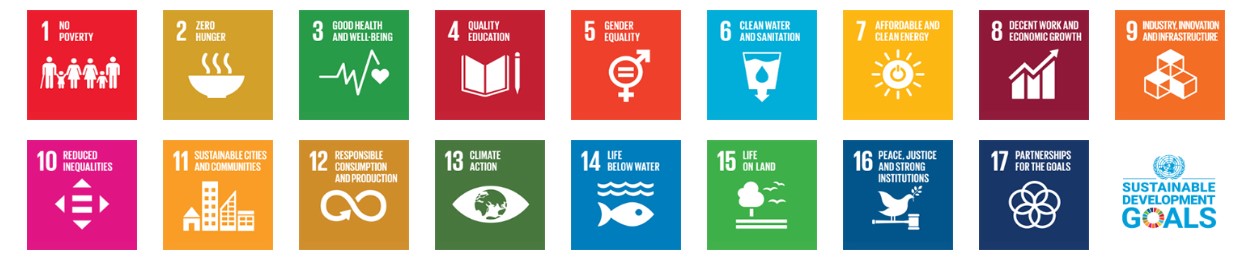
(A) Award Focus (Targeting 8 SDG Areas)
| Target Area | Core Research Directions |
| SDG3 Health & Well-being | Medical innovation, public health interventions, mental health tech (e.g., low-cost diagnostics, infectious disease systems) |
| SDG6 Clean Water | Freshwater pollution control, water recycling, ecological restoration (e.g., new membrane materials for sewage treatment) |
| SDG7 Affordable Energy | PV/storage tech, hydrogen catalysis, geothermal development (e.g., perovskite battery commercialization) |
| SDG9 Industry & Innovation | Sustainable infrastructure materials, digital governance platforms, green manufacturing (e.g., blockchain for supply chain carbon neutrality) |
| SDG13 Climate Action | CCUS, renewables integration, climate modeling (e.g., AI-based extreme weather warnings) |
| SDG14 Life Below Water | Marine ecosystem monitoring, coral reef restoration, deep-sea gene conservation (e.g., drone patrols in marine protected areas) |
| SDG15 Life on Land | Biodiversity monitoring, gene editing for conservation, ecological restoration (e.g., CRISPR for endangered species) |
| Cross-SDG Fields | Multi-goal solutions (e.g., “renewables + poverty alleviation” programs, “digital tech + healthcare equity” models) |
(B) Application Requirements
- Basic Requirements: Applicants must be young scientists born on or after January 1, 1980, regardless of nationality. Previous awardees and individuals with any conflict of interest are not eligible. Applicants should possess leadership skills and extensive experience in international scientific collaboration to better promote the coordinated development of global sustainable development efforts.
- Sustainable Development Contribution: Applicants must have achieved significant results in one or both of the following areas:
1. Innovative Basic Research: Conducting cutting-edge research in natural sciences closely related to sustainable development goals, providing theoretical support for sustainable development.
2. Technology and Engineering Applications: Developing and applying key technologies or engineering solutions that have measurable impacts in supporting sustainable development, effectively advancing the implementation of sustainable development goals.
All research outcomes must strictly adhere to scientific integrity principles and actively practice open science to promote the sharing of global research resources and collaborative innovation.
(C) Application Process
- Application Period: May 30, 2025 – July 31, 2025 (Singapore Time 23:59).
- Application Method:
- Self-Nomination: Candidates must complete an online application by the deadline, submitting a results report, a recommendation letter (one), and a scientific integrity statement.
- Institutional Recommendation: Nominations by international organizations or renowned research institutions; candidates must submit the online application by the deadline.
- Personal Recommendation: Nominations by experts in the same field with a recommendation letter; candidates must submit the online application by the deadline
- Application Form: YOUNG SCIENTIST SDGs AWARD APPLICAITION
(D) Award System
Awardees will receive a discretionary prize of USD 136,000 (pre-tax) and the following support:
- International Exposure and Influence Enhancement: Awardees will have the opportunity to be recommended for participation in high-level international platforms such as the International Renewable Energy Agency Annual Assembly 2026, the United Nations Climate Change Conference COP30, and the International Telecommunication Union AI for Good Summit 2026, Academic Council on United Nations System Annual Meeting 2026, showcasing their scientific achievements and sustainable development concepts on the global stage.
- Outcome Transformation and Talent Services: Awardees will receive comprehensive support for promoting and implementing research project outcomes, helping translate scientific achievements into practical productivity and advancing sustainable development projects.
- Science Communication and Long-term Development: Awardees will be eligible to serve as “Sustainable Development Science Communication Ambassadors,” participating in science popularization activities to promote the social dissemination and impact of scientific achievements, enhancing public awareness and participation in sustainable development.
All applicants must commit to actively promoting the United Nations Sustainable Development Goals and be willing to conduct an online volunteer service activity, explaining the connection between their research field and the SDGs and its real-world significance for economic and social development. Through science popularization lectures and interactive discussions, they should spread the concept of sustainable development among youth, help cultivate scientific literacy, and guide more young people to engage in SDG practices.
V. Previous Award Information (Partial)
The Sustainable Development Young Scientist Award was initially established in 2023 by the World Association of Young Scientists and the Wenzhou World Young Scientist Growth Foundation, among other institutions. Annually, up to five awardees are selected, each receiving a discretionary prize of USD 136,000 (pre-tax), with an award ceremony held during the World Young Scientist Summit. By 2024, the award has successfully been held twice, attracting candidates from 35 countries and regions worldwide. Some award information for 2023 and 2024 is as follows:
| Year | Awardee | Institution | Field of Contribution | Social Impact |
| 2023 | Henry Snaith | University of Oxford | Perovskite photovoltaic tech | 35% reduction in solar LCOE |
| 2024 | Guo Shaojun | Peking University | Hydrogen fuel cell catalysts | 40% energy saving in water electrolysis |
| 2024 | Simon Gosling | University of Nottingham | Climate modeling | Data support for 30 nations’ NDCs |
VI. Announcement of the 2025 Award Results
The “2025 Sustainable Development Young Scientist Award” ceremony will be held in late October 2025 during the World Young Scientist Summit. The 2025 World Young Scientist Summit and Sustainable Development Young Scientist Award Ceremony will take place from October 25-27, 2025, in Wenzhou, China (main venue) + online global sub-venues, bringing together young scientists from around the world, representatives of research institutions, and experts and scholars in the field of sustainable development to witness this important moment. By 2024, it has been held six times consecutively. In 2019, President Xi Jinping from PR China sent a congratulatory letter to the inaugural WAYS Summit, stating that “the future of science and technology lies in youth.” In 2020, UN Secretary-General António Guterres sent a letter to young scientist representatives attending the WAYS Summit. Over the past six years, it has established exchange links with more than 130 countries and regions and over 100 overseas universities, inviting over 30 Nobel Prize and Turing Award winners and more than 400 academicians from China and abroad, as well as 6,000 scientists, entrepreneurs, and educators to participate.
Contact Us:
If you have any questions about the Sustainable Development Young Scientist Award, please contact SDG-Young-Scientist-Award@ungyldc.org and ways-secretariat@outlook.com for further inquiries.
This project strictly adheres to international scientific award evaluation standards, employing a “double-blind review + social impact assessment” mechanism to ensure the award’s authority and credibility, selecting truly impactful young scientific talents for the global sustainable development field.
Initiating Institution