- Home
-
About Us
- Masterclass
-
Our Opportunities
- Certificate
- InnoHub
- News & Updates
- Contact Us
Bridging Vision and Action: Inside the 2026 International Program on Digital Economy Governance
From policy blueprints to deployable smart city systems, how 34 global leaders spent 9 days in Beijing co-creating the future of digital governance.
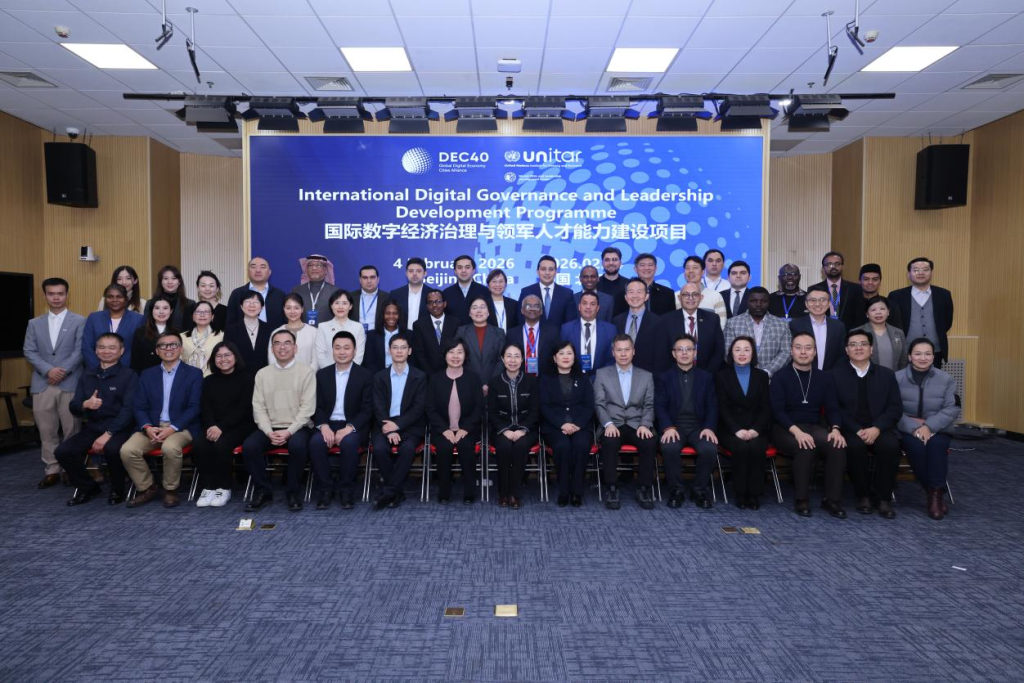
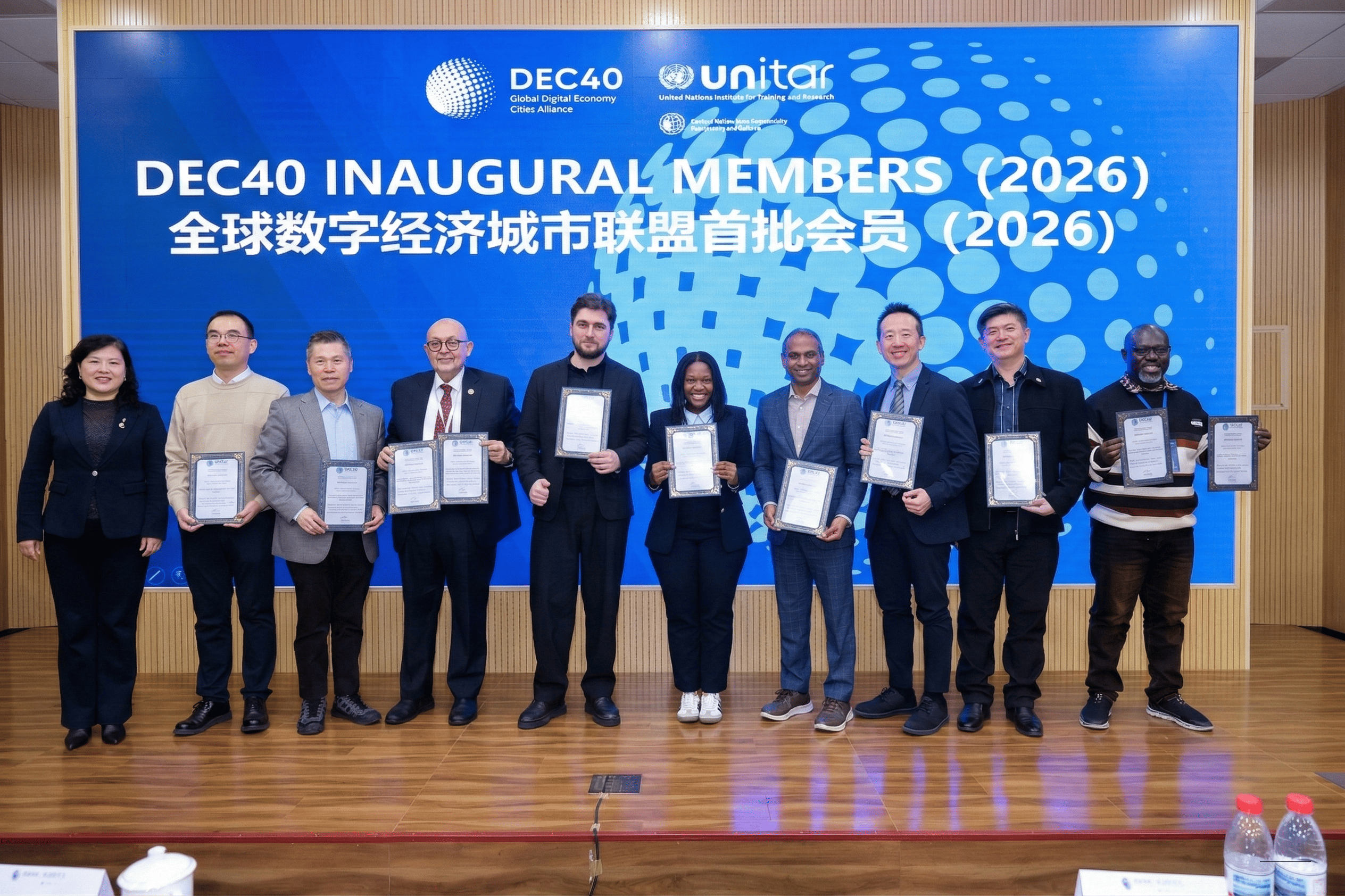
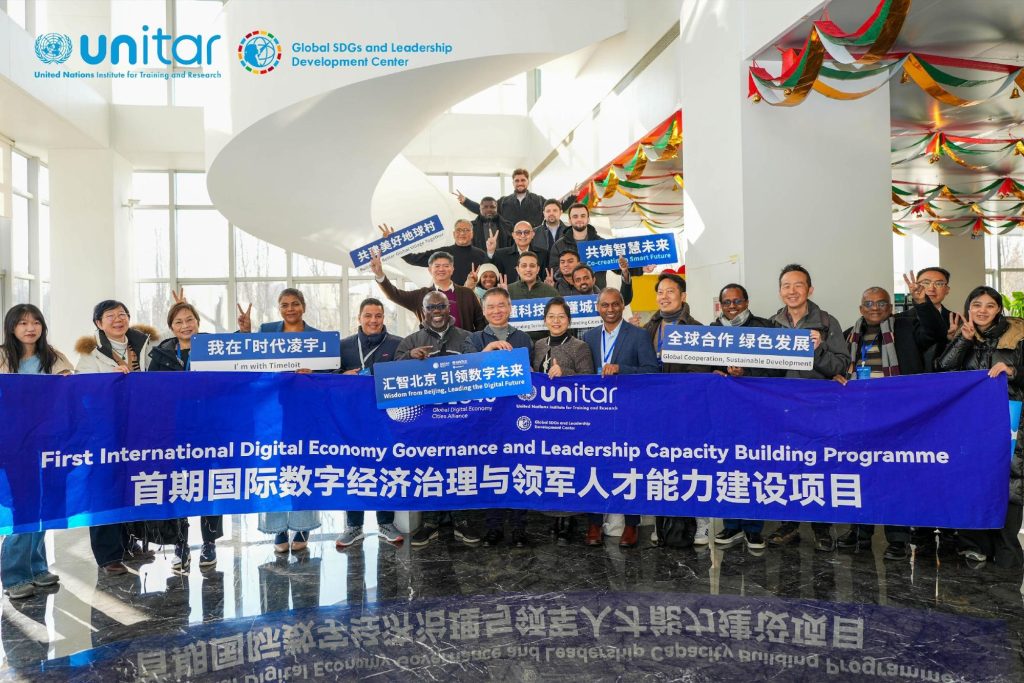
Between January 27 and February 4, 2026, the Global Digital Economy Cities Alliance (DEC40), in partnership with the United Nations Institute for Training and Research (UNITAR), the Beijing Municipal Bureau of Economy and Information Technology, and the Beijing Economic and Technological Development Zone, proudly hosted the International Program on Digital Economy Governance and Leadership Capacity Building.
Bringing together 34 senior officials, city decision-makers, and industry experts from 17 countries, this immersive 9-day initiative moved beyond theoretical discussions. Through intensive policy workshops, financing simulations, and front-line industry visits, delegates explored how strategic vision translates into operational reality.
Unpacking the “Beijing Governance Code”
The program kicked off by dissecting the logic behind Beijing’s digital economy planning. Participants explored how strategic design, governance tools, and cross-sector coordination shape high-quality digital development.
Visits to industry leaders like Hollysys demonstrated smart transportation systems in action, proving that policy direction and technological innovation must move in sync. What stood out to international participants was the speed at which strategic visions are transformed into industrial implementation.
The Full Chain of AI: From Infrastructure to Application
Discussions around AI often stop at model performance, but true digital governance requires understanding the foundational systems behind the scenes.
Delegates visited Beijing Electronic Digital & Intelligence to see city-level computing power scheduling and data governance in action, followed by a deep dive at Zhipu AI to understand how Large Language Models (LLMs) are embedded into real industrial contexts.
Understanding the systemic coordination required across infrastructure, model capabilities, and governance frameworks is critical for scaling AI in public sectors.
Building Resilient, Thinking Cities
A core theme of the fellowship was urban resilience—how cities can learn, adapt, and protect their citizens in the digital age. Key explorations included:
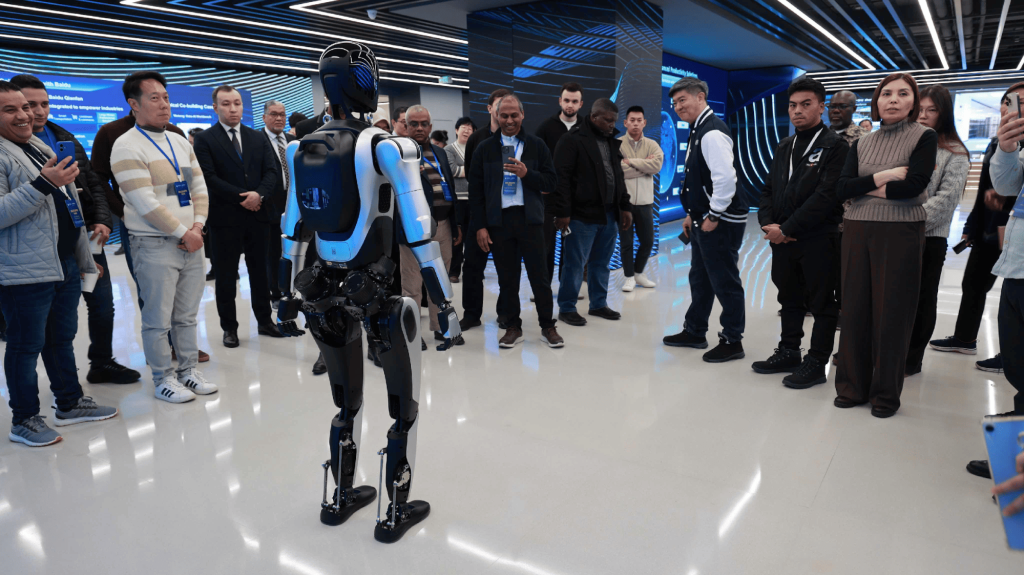
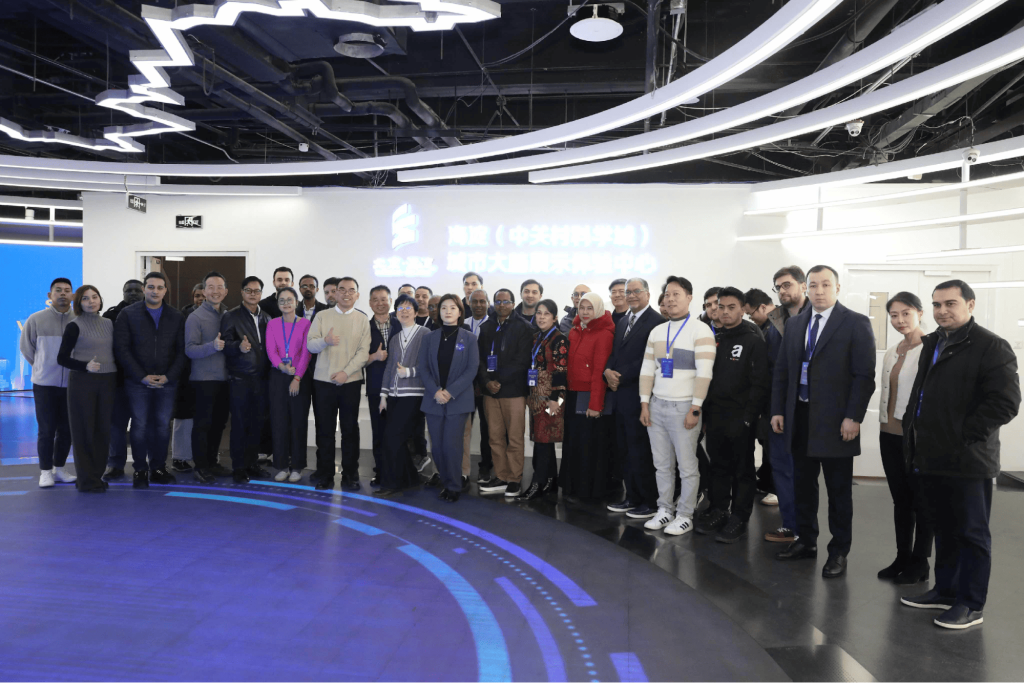
- The “City Brain”: Insights from CAS Brain showcased how real-time data optimizes traffic and urban services.
- Digital Education: iSoftStone demonstrated how tech solutions bridge learning gaps and make education more accessible.
- Health & Security: Real-world case studies from Anzhen Hospital (digital healthcare) and Qi’anxin (cybersecurity) highlighted the foundational pillars of safe, livable smart cities.
Visualizing how disparate urban data streams—from healthcare to traffic management—feed into a centralized, responsive “City Brain.”

Financing the Future: From Ideas to Bankable Projects
Technical excellence alone does not secure funding. On Day 8, participants engaged in a rigorous financing simulation workshop at Timeloit, co-facilitated by experts from the Export-Import Bank of China, the Asian Development Bank, and the CAREC Institute.
In this session, digital transformation was reframed as a city’s “shock absorber.” Working in teams, delegates learned to translate their resilience case studies into bankable project proposals—mastering financial modeling, risk mitigation, and sustainable operating models to articulate tech projects in the language of capital.
Where Heritage Meets Innovation
Innovation does not require erasing history. Through curated field visits, delegates witnessed Beijing’s unique dialogue between past and future:
- Shougang Park: A former steel industrial site brilliantly transformed into a hub for cultural, Olympic, and digital innovation.
- Qianmen & Beijing Fun: An AIGC exhibition demonstrating how AI is redefining cultural narratives and tourism in the city’s historic commercial heart.
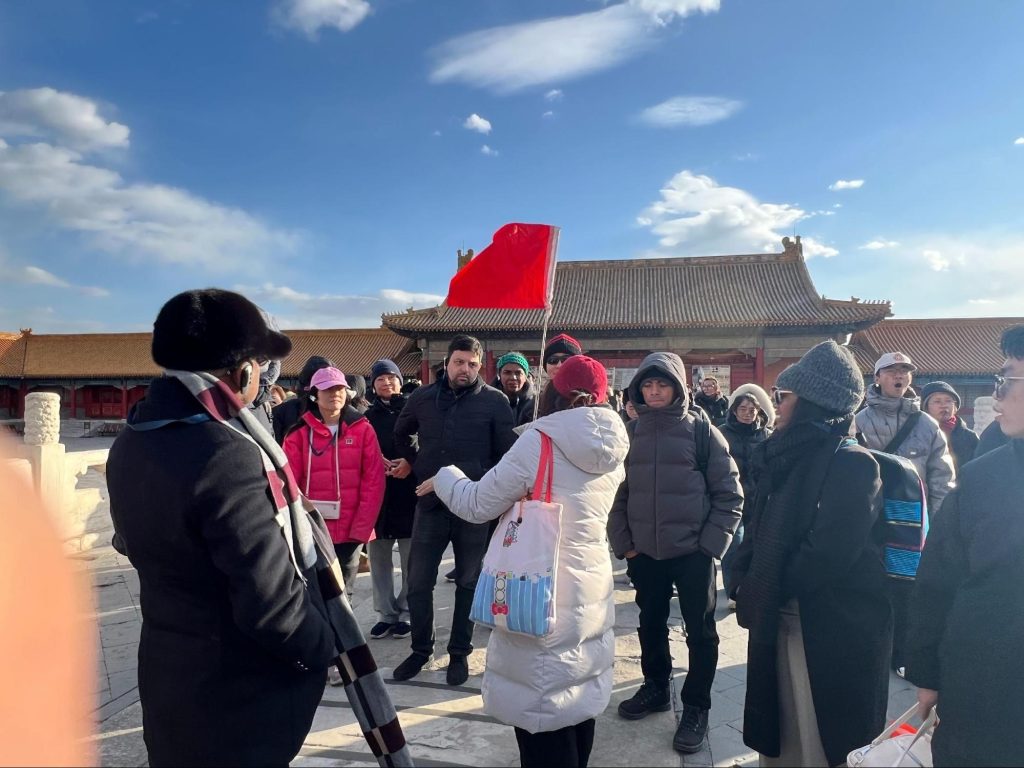
The Forbidden City: Examining how historical architectural order, symmetry, and spatial design reflect enduring governance philosophies
Turning Shared Experience into Actionable Strategy
The program culminated on February 4 at the Beijing Vocational University of Science and Technology. Chaired by Mr. Liu Weiliang, Deputy Director-General of the Beijing Municipal Bureau of Economy and Information Technology, the closing “Digital Economy Governance Policy Dialogue” focused on policy localization and cross-border cooperation.
Participants didn’t just leave with new knowledge; they graduated having developed Local Digital Transformation Strategic Plans using a shared “Diagnosis–Toolkit–Roadmap” methodology. These plans are designed to be actionable roadmaps ready for implementation in their home nations.
This is not an ending, but a beginning. With the second phase of the project scheduled to launch in late March 2026, DEC40 and its partners are committed to fostering a collaborative, two-way ecosystem for pragmatic, transnational cooperation. Together, we are turning vision into impact.