
GSLC Joins Shanghai Shipping Week Panel on Cross-Border Supply Chain Compliance and Responsibility Allocation
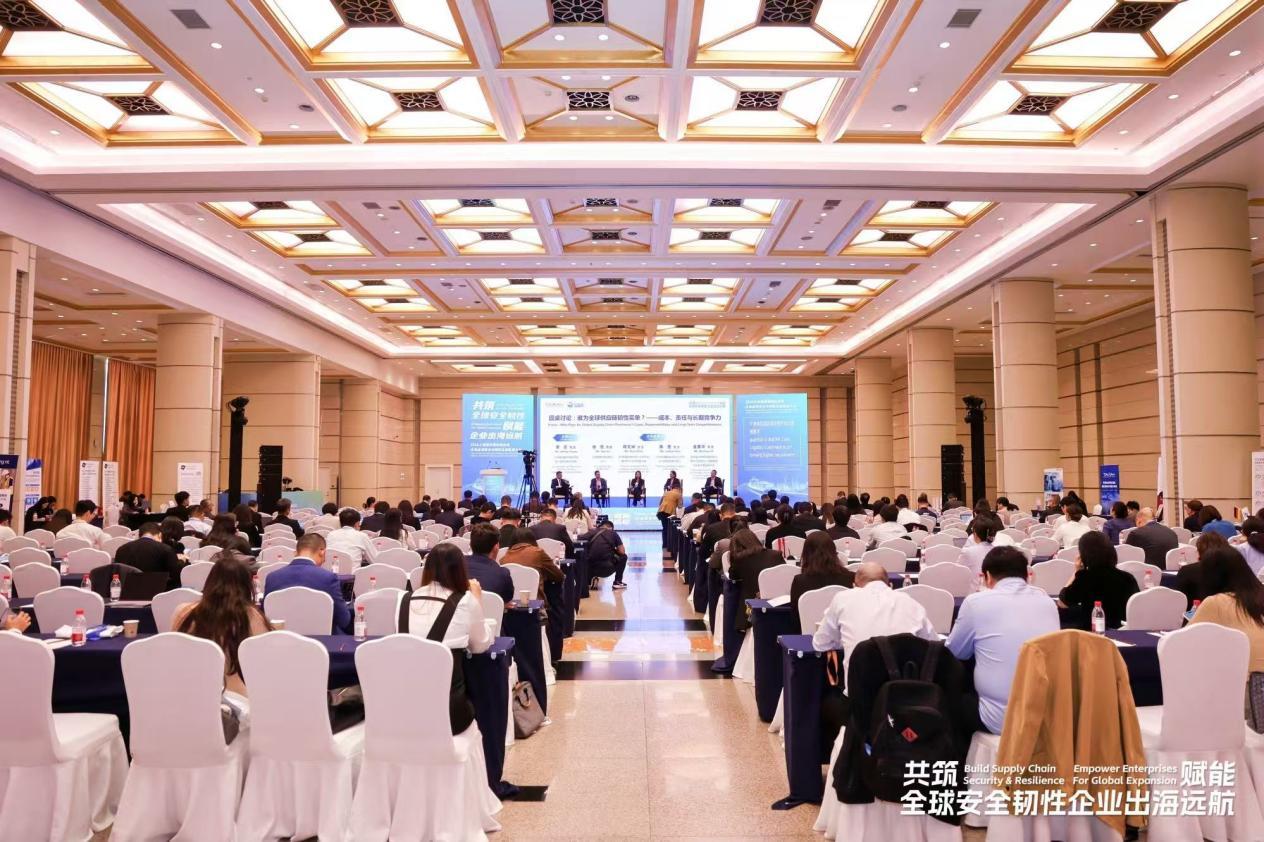
Shanghai, 22 October 2026 — The Enterprise Going-Global Security and Resilience Ecosystem Alliance Conference, part of the 2026 Shanghai Pudong International Shipping Week, was held at the Shanghai International Convention Center. Hosted by the Shanghai Representative Office of the Transported Asset Protection Association Asia Pacific (TAPA APAC), the conference focused on security and resilience in corporate globalization, with discussions covering ESG risk management, cross-border investment and M&A, international trade and supply chain legal risks, and overseas employment compliance. The agenda touched on the implications of international compliance frameworks such as the EU’s CBAM and CSRD for companies operating across borders. Jin Zhenhua, Secretary-General of the Committee on Compliance and Risk Management China Branch, and Johnny Huang, Director of the Global SDGs Leadership Center (GSLC), attended the event.
At the roundtable “From Risk Prevention to Rights Remedy: Legal Risk Practice in International Trade and Cross-Border Supply Chains,” Executive Director Huang Zhong served as moderator, guiding discussion on risk identification, responsibility allocation and dispute resolution in cross-border supply chains. The discussion focused on the imbalance between responsibility and cost that companies face as clients continually raise delivery, compliance and disclosure requirements, and on moving supply chain risk management from after-the-fact accountability toward ex-ante prevention.
Jin Zhenhua, Secretary-General of the GSLC Committee on Compliance and Risk Management, addressed cost and responsibility allocation in building global supply chain resilience, identifying four common forms of responsibility imbalance in cross-border supply chain contracts: a mismatch between the legally liable entity and the contractual responsible party; obstacles to tracing responsibility across multi-tier supply chains; compliance costs—including carbon costs, third-party verification fees and remediation expenses—being passed down the chain without a clear cost-sharing mechanism; and exporters lacking sufficient control over upstream labor conditions while still bearing compliance risks such as product bans or withdrawals. He proposed five points for companies to clarify before signing: delineating responsibility boundaries based on actual control; establishing a clear cost-sharing mechanism; agreeing on clear notification obligations; building a tiered emergency collaboration mechanism; and improving follow-up accountability arrangements.
The conference provided a platform for professional exchange and cross-sector collaboration in international trade and cross-border supply chains, and offered the Center a setting for dialogue with international industry organizations and certification bodies within its focus areas of global governance and multilateral cooperation, and localization of the Sustainable Development Goals. The Center will continue to draw on its collaboration hubs in Geneva, Singapore, Beijing, Shanghai and Nairobi to promote deeper integration of legal services, sustainable development and industry practice, combining international experience with local knowledge.
About GSLC
The Global SDGs Leadership Center (GSLC, formerly GSLDC) is an independent international institution for research, education, and capacity building. Originating from a joint initiative by the United Nations Institute for Training and Research (UNITAR) and the Global Youth Leadership Development Council (GYLDC), it transitioned into an independent international institution in November 2026. With hubs in Geneva, Singapore, Beijing, Shanghai, and Nairobi, the Center works across global governance, SDG localization, and the integration of digitalization and sustainable development.
Media Contact: Global SDGs Leadership Center (GSLC)
Email: info@ungyldc.org