
- Home
-
About Us
-
Program
-
Media
- Volunteer & Internship
-
Academy
- InnoHub
- Contact Us
News & Events
2nd SDGs Youth Public Policy Innovation Challenge concludes at Renmin University of China
The second SDGs Youth Public Policy Innovation Challenge, also known as the Global Development Public Policy Youth Innovation Challenge (GDPPYI), concluded at Renmin University of China on 22 July 2026 after bringing together more than 4,000 young participants from nearly 70 countries and regions and over 200 universities. The 2026 edition was themed Protecting Cultural Diversity and received 866 policy proposals, with 15 finalist teams advancing to the final round in Beijing before taking part in a field-research programme in Beijing and Suzhou.
A global call to protect cultural diversity
Organised by Renmin University of China and the University Alliance of Young Ambassadors, and co-organised by the Global SDGs and Leadership Development Center (GSLDC) and the Global Youth Dialogue among Civilizations Alliance (GYDA), the 2026 Challenge invited young people worldwide to develop innovative public policy solutions for cultural heritage preservation, cultural diversity, inclusive development and sustainable governance.
The Challenge was designed to help young people move from research and ideas towards practical policy proposals while creating space for exchange and mutual learning among different cultures and civilisations.
Opening ceremony
The opening ceremony of the finals took place on the morning of 21 July. Attendees included Ma Huaide, President of Renmin University of China; Dong Xia, Deputy Secretary-General of the All-China Youth Federation; Liu Weiling, Deputy Editor-in-Chief of China Daily; Grace Gao, Executive Director of GSLDC; and Zhang Jing, Executive President of GYDA. Fabrizio Hochschild, former UN Under-Secretary-General and Senior Adviser to GSLDC, delivered a video address.
Also attending were observer delegates from 21st Century newspaper, member universities of the University Alliance of Young Ambassadors and the 15 competing teams.
Fabrizio Hochschild described cultural diversity as the shared heritage of all humanity and an important foundation for inclusive, equitable and sustainable development. He noted that the Challenge gives young people a platform to translate innovative ideas into practical public policy solutions, and encouraged participants to engage in candid dialogue, mutual learning and youth leadership in support of the UN’s 2030 Sustainable Development Goals.
Ma Huaide highlighted the potential of artificial intelligence to support understanding and inclusiveness among different civilisations while cautioning against cultural homogenisation and algorithmic bias. Dong Xia said young people are both inheritors of civilisation and pioneers of the future, while Liu Weiling emphasised the role of youth exchange and international communication in shaping new approaches to cultural governance.
Contestant representative Yara Nieves Handschin and volunteer representative Xiong Yangjian also addressed the ceremony. The speakers reflected on institutionalised heritage protection, respect for difference and the principle of “harmony without uniformity”. Ma Huaide, Dong Xia, Liu Weiling, Grace Gao and Zhang Jing, together with contestant representatives, also released Global Development, Youth Solutions: Protecting Cultural Diversity, a collection featuring 53 outstanding cases selected from this year’s 866 proposals across four dimensions: better governance, smoother exchange, deeper integration and broader inclusion.
Final round: from ideas to policy proposals
On 21 and 22 July, the 15 finalist teams presented their proposals and responded to questions from the panel. Experts and scholars from the University of Minnesota Duluth, the Pontifical Catholic University of Peru (PUCP), Renmin University of China, Beijing University of Posts and Telecommunications and China Daily, among other institutions, provided commentary on the proposals.
The final round demonstrated the breadth of youth-led policy thinking on cultural diversity. The proposals addressed cultural heritage in conflict settings, digital archives, Indigenous and Afro-descendant communities, language revitalisation, ethical cultural data governance, audiovisual heritage and inclusive digital governance.
Youth salon: dialogue across cultures
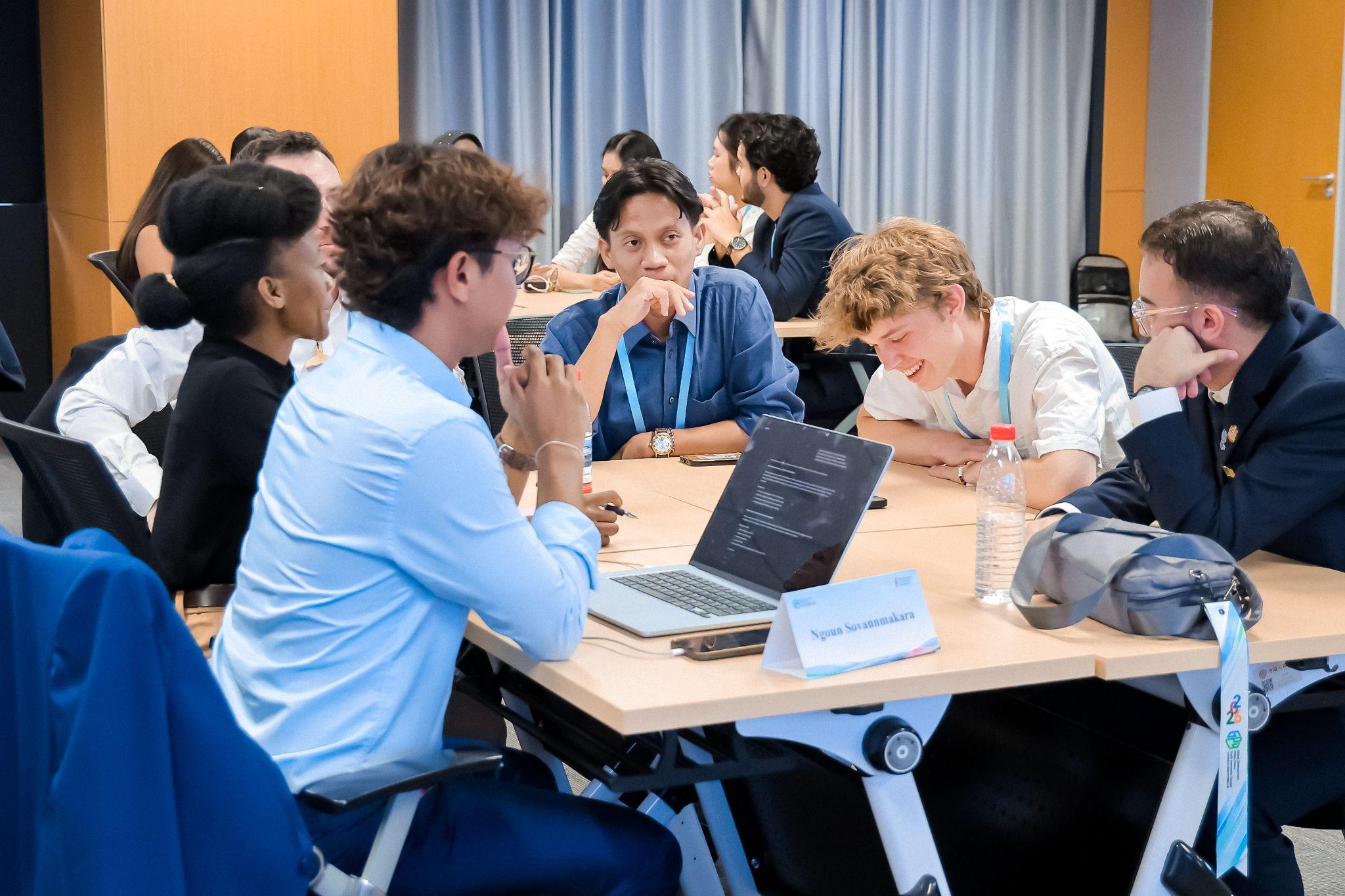
On the afternoon of 22 July, GSLDC and GYDA co-hosted a Youth Salon for GDPPYI finalists and observer delegates at Renmin University of China. Ngoun Sovannmakara, Program Management Expert at GSLDC, introduced GSLDC’s work advancing youth leadership and public policy innovation in support of the UN 2030 Agenda. Zhang Jing, Executive Director of GYDA, presented GYDA’s initiatives fostering dialogue among civilisations, followed by a further guest presentation.
In the roundtable session, participants worked in groups of four to six and selected one of four themes for discussion: global cultural governance and cross-cultural dialogue; cultural diversity, inheritance and inclusive development; cultural resource circulation and mutual learning among civilisations; and cultural empowerment for high-quality economic development. Each group then shared a short summary with the wider group.
Awards ceremony recognises youth innovation
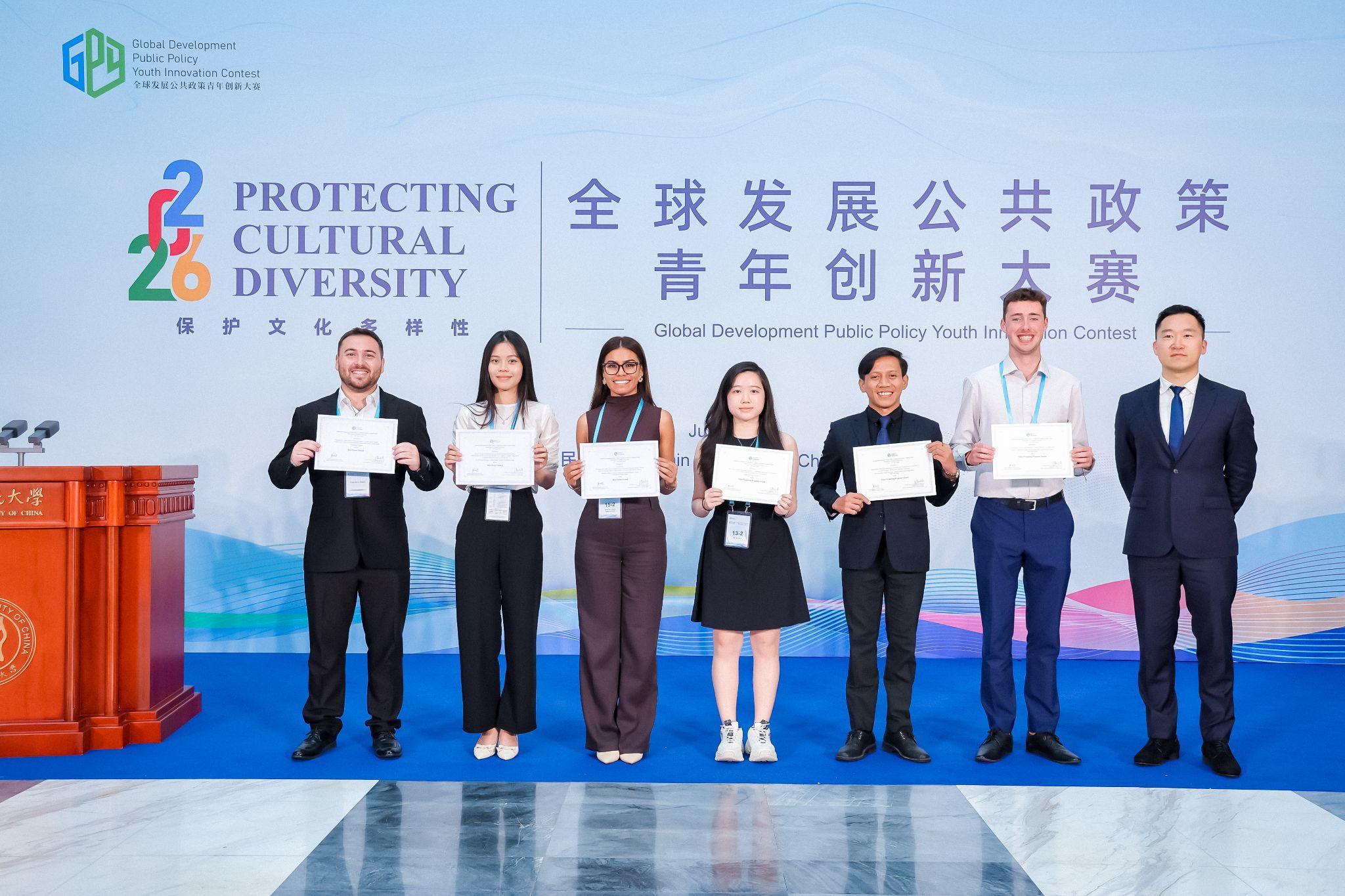
The awards ceremony was held on the evening of 22 July. Zhi Xiaoqiang, Vice President of Renmin University of China, attended and spoke. Zhang Jing, Ngoun Sovannmakara, Professor Feng Hairong of the University of Minnesota Duluth, Professor Nifta Lau of PUCP and representatives from Renmin University of China also attended. Awards were presented by representatives of the partner institutions and members of the academic panel.
Teams from the University of Oxford and the City University of Hong Kong won first prize. Five teams, including one from the National Autonomous University of Mexico (UNAM), won second prize, while eight teams, including one from Renmin University of China, won third prize. Individual honours and a further 12 team awards recognised observation, research, collaboration, poster design and proposal quality.
The ceremony also featured a classical music programme titled Harmony in Diversity, Beauty Shared, performed by the Renmin University of China Student Art Troupe.
Award highlights
Premier proposals
- University of Oxford Team, UK: A Parametric Finance Mechanism for Cultural Heritage at Conflict Risk
- City University of Hong Kong Team: Safeguarding Intangible Agricultural Heritage: An AI and IoT-Driven Digital Living Archive for Banda Neira Nutmeg Production
Excellent proposals
- National Autonomous University of Mexico (UNAM) Team: Living Roots
- Diplomatic Academy of Vietnam Team: iLocal
- Khalifa University Team, UAE: A CARE-Aligned Cultural Data Governance Framework for AI Training Data
- University of Malaya Team: The Cultural Data Procurement Sandbox
- Dublin City University Team, Ireland: Closing the Competence-Activation Gap for Irish in Everyday Life
Meritorious proposals
- Université Paris 1 Panthéon-Sorbonne Team, France: SENTINEL
- KU Leuven Team, Belgium: Who Pays to Preserve?
- Moscow State Institute of International Relations (MGIMO) Team, Russia: From Extractive Tourism to Community Benefit-Sharing in the Altai Republic
- Renmin University of China Team: Revitalizing Endangered Cultural Heritage: A 5P Collaborative Model
- Universitas Indonesia Team: Algorithmic Justice
- Ohio State University Team, USA: Transparency, Replication, and Reconciliation
- University of Zimbabwe Team: DigiCulture Zimbabwe Plus
- Pontifical Catholic University of Peru (PUCP) Team: Recovering What Was Never Meant To Last
Team awards
The team awards recognised field research, poster design, collaboration, innovation and promise across the finalist proposals.
- Best Field Research Award: Dublin City University Team and National Autonomous University of Mexico (UNAM) Team.
- Best Poster Award: Diplomatic Academy of Vietnam Team, Ohio State University Team, National Autonomous University of Mexico (UNAM) Team, University of York Team and Pontifical Catholic University of Peru (PUCP) Team.
- Best Team Collaboration Award: Université Paris 1 Panthéon-Sorbonne Team and Renmin University of China Team.
- Most Innovative Proposal Award: University of Oxford Team, City University of Hong Kong Team and KU Leuven Team.
- Most Promising Proposal Award: University of Oxford Team, City University of Hong Kong Team and University of Malaya Team.
Individual awards
Most Valuable Individual Award
Yara Nieves Handschin, Nelson Mandela School, Berlin; Lim Ting Qian, City University of Hong Kong; Lucas Spicer, Dublin City University, Ireland; Le Thi Hong Phuong, Diplomatic Academy of Vietnam; and Maria Candela Milikowsky Fernandez, Université Paris 1 Panthéon-Sorbonne, France.
Best Observer Award
Chen Yongqi, Shanghai International Studies University; Fu Kunhao, Beijing Language and Culture University; Li Renke, Shanghai International Studies University; Wu Jian, Jilin University; and Njuguna Anne Njambi, Renmin University of China.
Excellent Observer Award
Ren Chengwanxin, Wang Xinran, Wang Yupan, Zhu Mengmeng, Aya Alnasser, Craig Harris Shapiro, Huang Lixuan, Lan Jinhang, Ling Han, Liu Fangfei, Wan Tianhao, Zhu Haiyuan and Zhu Yining.
Field research journey: Beijing and Suzhou
Beyond the competition itself, the finalists took part in the Global Development Companion Journey, a structured field-research programme designed to move participants from policy theory into practice.
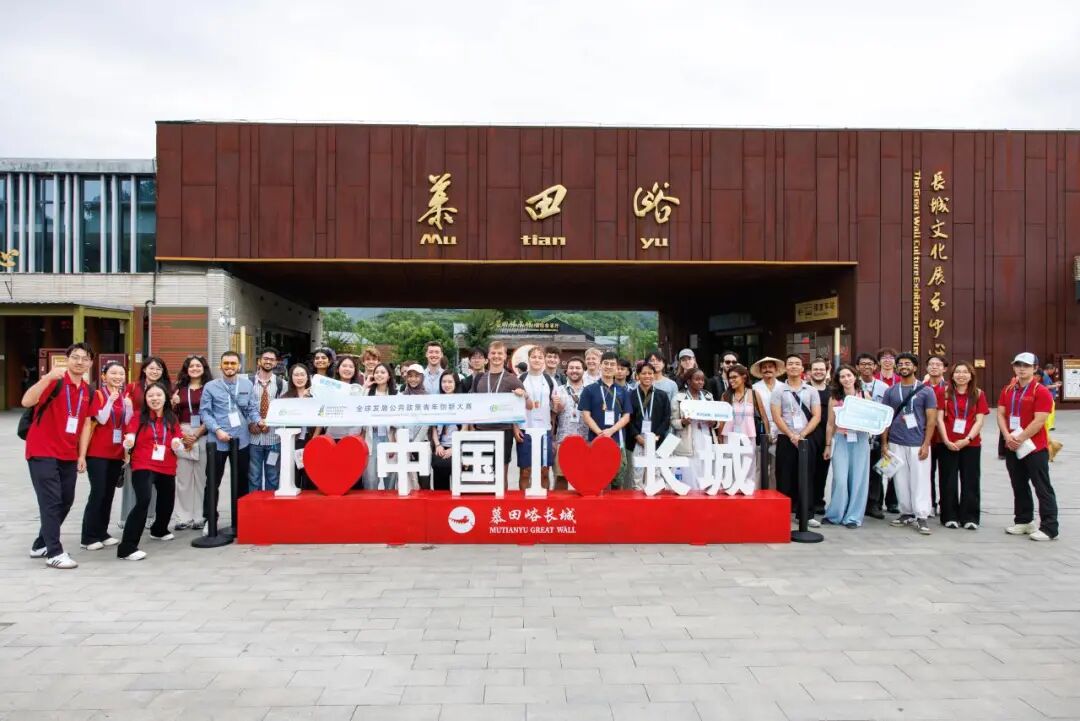
Finalists arrived in Beijing on 19 July and completed registration ahead of the programme. On 20 July, under the theme “Enhancing Measures for the Protection of World Cultural Heritage”, participants visited the Mutianyu section of the Great Wall to examine heritage conservation, tourism development and sustainable utilisation in practice.
From 24 to 26 July, the group travelled to Suzhou and explored the relationship between cultural heritage, innovation and sustainable urban development across sites including the Pingjiang Road Historic District, Suzhou Bay Digital Art Museum, Jinji Lake, the Master of the Nets Garden, the Imperial Kiln Brick Museum, the Panmen Scenic Area, the Suzhou Garden Museum, the Humble Administrator’s Garden and the Suzhou Silk Museum. Discussions covered cultural heritage preservation, digital technology for cultural protection, creative industries, public investment in cultural development, sustainable urban governance and intangible cultural heritage preservation.
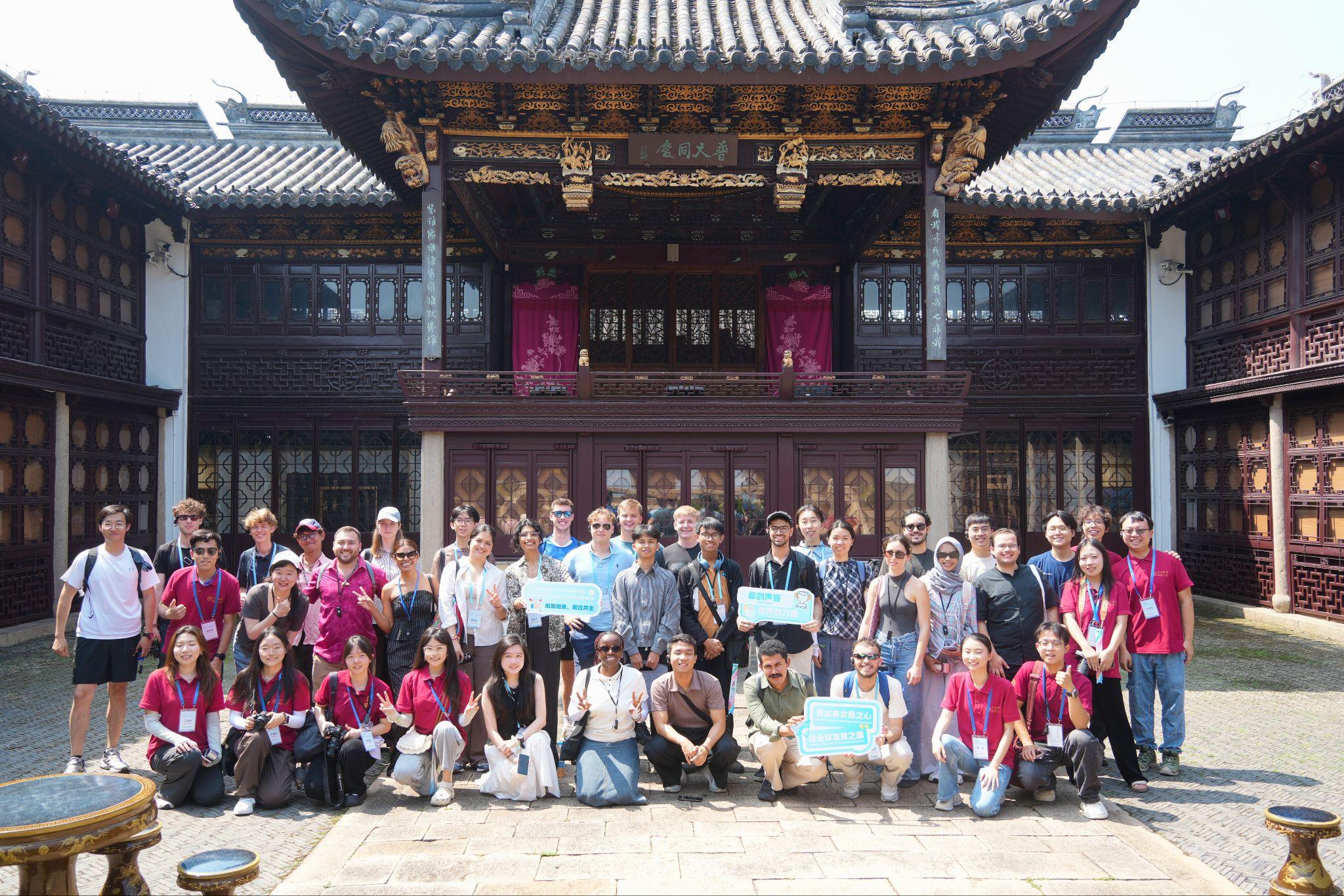
The programme concluded on 26 July with a closing ceremony at which participants reflected on their experience, youth representatives shared their insights, and the cross-cultural friendships and international cooperation built during the Challenge were celebrated.
About the Challenge
The SDGs Youth Public Policy Innovation Challenge was founded in 2025 under the guidance of the All-China Youth Federation, organised by Renmin University of China and the University Alliance of Young Ambassadors, and co-organised by GSLDC and GYDA. The Challenge advances the four Global Initiatives, supports implementation of the UN’s 2030 Agenda for Sustainable Development and provides a platform for young people worldwide to engage in international exchange and global governance.
Source and production: Renmin University of China. Text by Ding Xueru and Zhang Jinghan. Photos by Zhang Yu and Peng Chunting. Produced by Xia Hongyu, Ren Jiayan and Zou Yifei. Adapted for GSLDC communications.